
Dark spots on face in Pakistan: marks, scars, and what fades them
The dark patch left behind after a pimple heals is a mark, not a scar. Marks are pigment sitting in otherwise normal skin and they fade, slowly, with the right ingredients. Scars are a change in the skin's texture and no cream fixes them. Almost every product in this category is sold for both, which is why so many people spend months on the wrong thing.
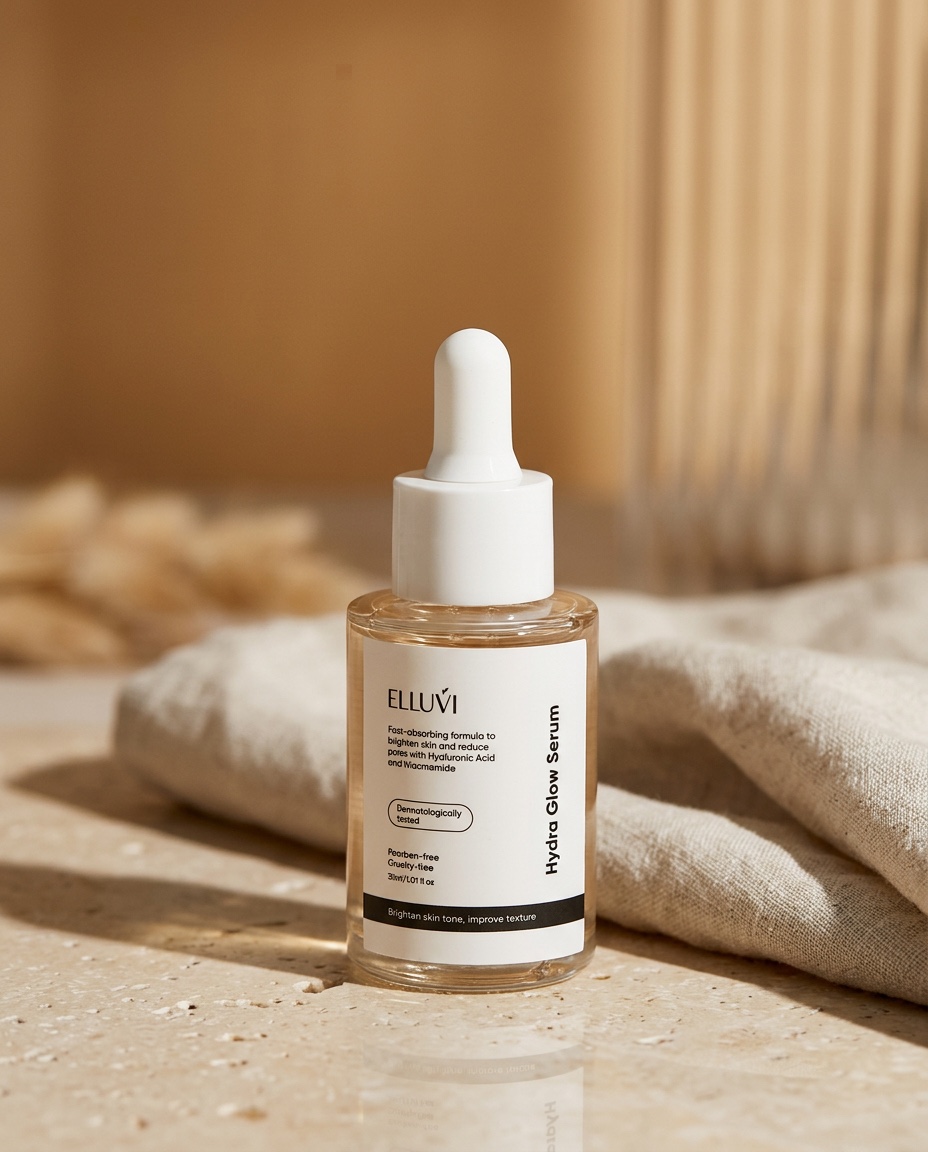
The serums shown are for the brown and red marks this page is about. If you want the same actives in one night step instead of two bottles, that is Hydra Glow Cream at Rs. 1,449.
Reviewed

How to tell a mark from a scar
Run a finger over it with your eyes closed. If the skin is smooth and only the colour has changed, it is a mark and it will fade. If you can feel a dip or a raised ridge, it is a scar and it needs a procedure rather than a product.
You can also check in flat, even light. Marks look much less obvious when the light is not raking across your face, because there is no texture to cast a shadow. Scars look the same in every light. This takes ten seconds and it saves people from buying creams that were never going to work.
Brown marks and red marks need different things
Brown marks are excess pigment and respond to niacinamide, vitamin C and retinoids. Red or purple marks are lingering blood vessels near the surface and fade largely on their own, helped mainly by not irritating the skin further.
On brown skin, brown marks are far more common and they last longer. That is not a flaw in the skin, it is more active pigment cells doing what they are meant to do after an injury. It also means aggressive treatment backfires more here than it does on paler skin.
The ingredients that fade marks
Niacinamide interrupts pigment transfer to the surface. Vitamin C works on pigment already formed and protects against making more. A retinoid speeds up cell turnover. Sunscreen stops the whole process restarting.
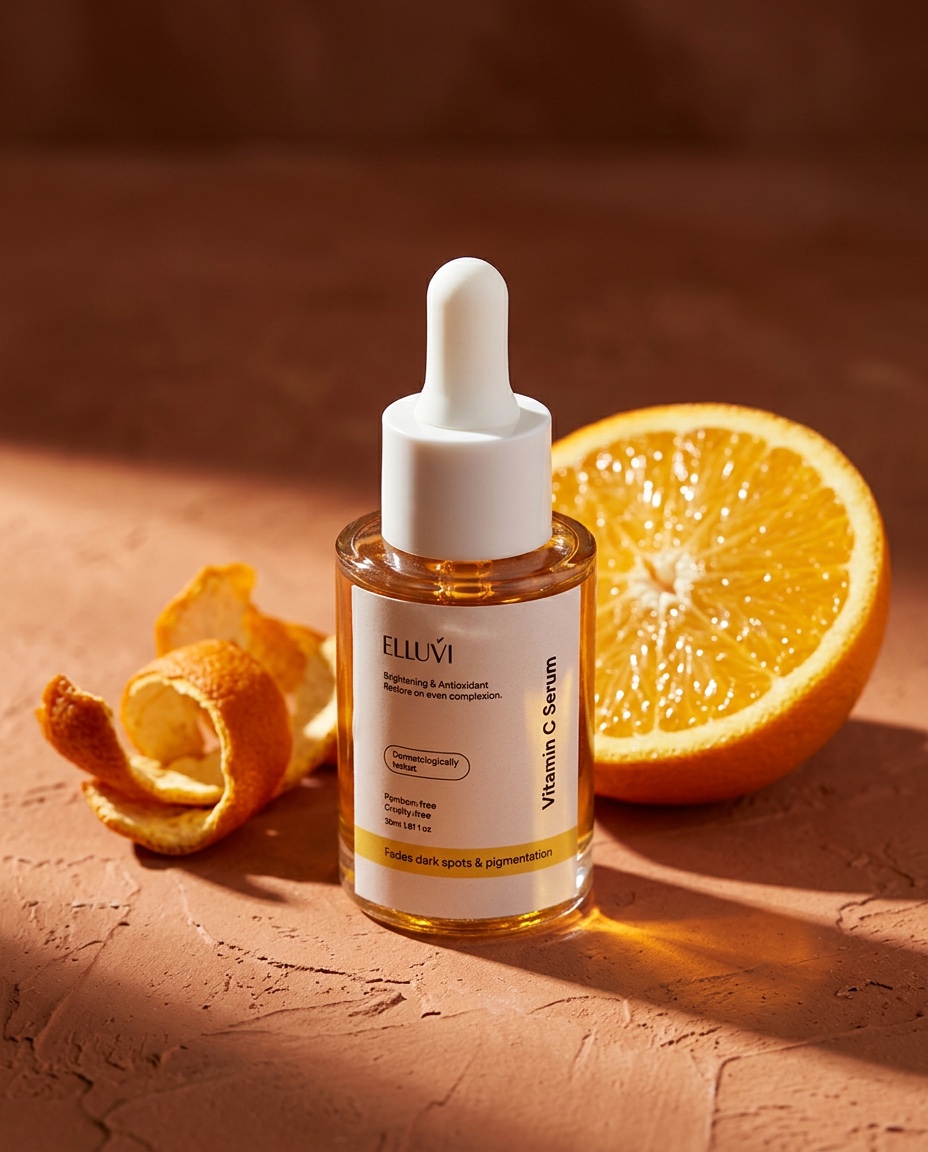
Two of these is a routine. Four of them at once is a route to irritation, and irritation on brown skin makes new marks while you are trying to fade the old ones. Elluvi Hydra Glow Serum is 10% niacinamide with 1% Zinc PCA at Rs. 1,149 for 30 ml, and the Vitamin C Serum is 10% ascorbic acid at Rs. 1,299 for 30 ml.
Swipe the table sideways to see every column.
| Ingredient | How it works, and how long | Local price |
|---|---|---|
| Sunscreen | Stops new marks and stops old ones darkening. Nothing below works without it | Rs. 898 to Rs. 1,899 |
| Vitamin C 10% | Antioxidant, morning. Eight to twelve weeks | Rs. 1,299 to Rs. 2,099 |
| Alpha arbutin 2% | Interrupts pigment production. Four to six weeks on fresh marks | Rs. 1,119 to Rs. 1,999 |
| Niacinamide 10% | Slows pigment transfer to the surface. Gradual, and easy to tolerate | Rs. 699 to Rs. 1,500 |
| Azelaic acid 10 to 20% | Pigment and acne together. Safe in pregnancy. Ten to twelve weeks | Rs. 808 prescription, Rs. 1,199 upward cosmetic |
| Retinol 0.3% | Turnover, at night. Three months or more | Rs. 1,299 to Rs. 1,449 |
| Hydroquinone | Effective and prescription-controlled in most markets. Not a shelf purchase | See a dermatologist rather than a shop |
Stop the new spots first
Every fresh breakout becomes next month's dark spot. Getting the acne under control does more for your marks over six months than any fading product does.
This is the part people skip because it feels like a detour. It is not. Fading marks while producing new ones every week means running to stand still, and the maths never works out in your favour.
Do not pick, and do not scrub
Picking a spot pushes the inflammation deeper and makes the mark darker and longer-lasting. Harsh scrubs do the same thing across the whole face.
Physical scrubs with rough particles are still widely sold here for exactly this problem, which is unfortunate, because they cause more marks than they clear. Gentle chemical exfoliation a couple of nights a week does the job without the damage.
How long marks take to fade
Three to six months for most post-acne marks with a consistent routine. Fresh marks fade faster than ones you have had for a year. Nothing safe clears them in weeks.
That timeline is the single most useful thing on this page. People give up at week six, conclude the product failed, buy something else, and restart the clock. The routine that works is the one you were already using, kept going.
What to do about actual scars
Indented or raised scars need a dermatologist. Microneedling, chemical peels and laser are the options, and results depend on the scar type. No topical product changes skin texture meaningfully.
A brand telling you a cream removes acne scars is either using the word loosely or is not being straight with you. Products help the colour. Procedures help the shape.
Sunscreen, again
UV darkens existing marks directly. Skipping sunscreen makes the mark you already have worse, on top of slowing everything else down.
Sunscreen is not currently sold by Elluvi. Use a broad-spectrum SPF 30 or higher from a trusted brand.
A routine that fits this problem
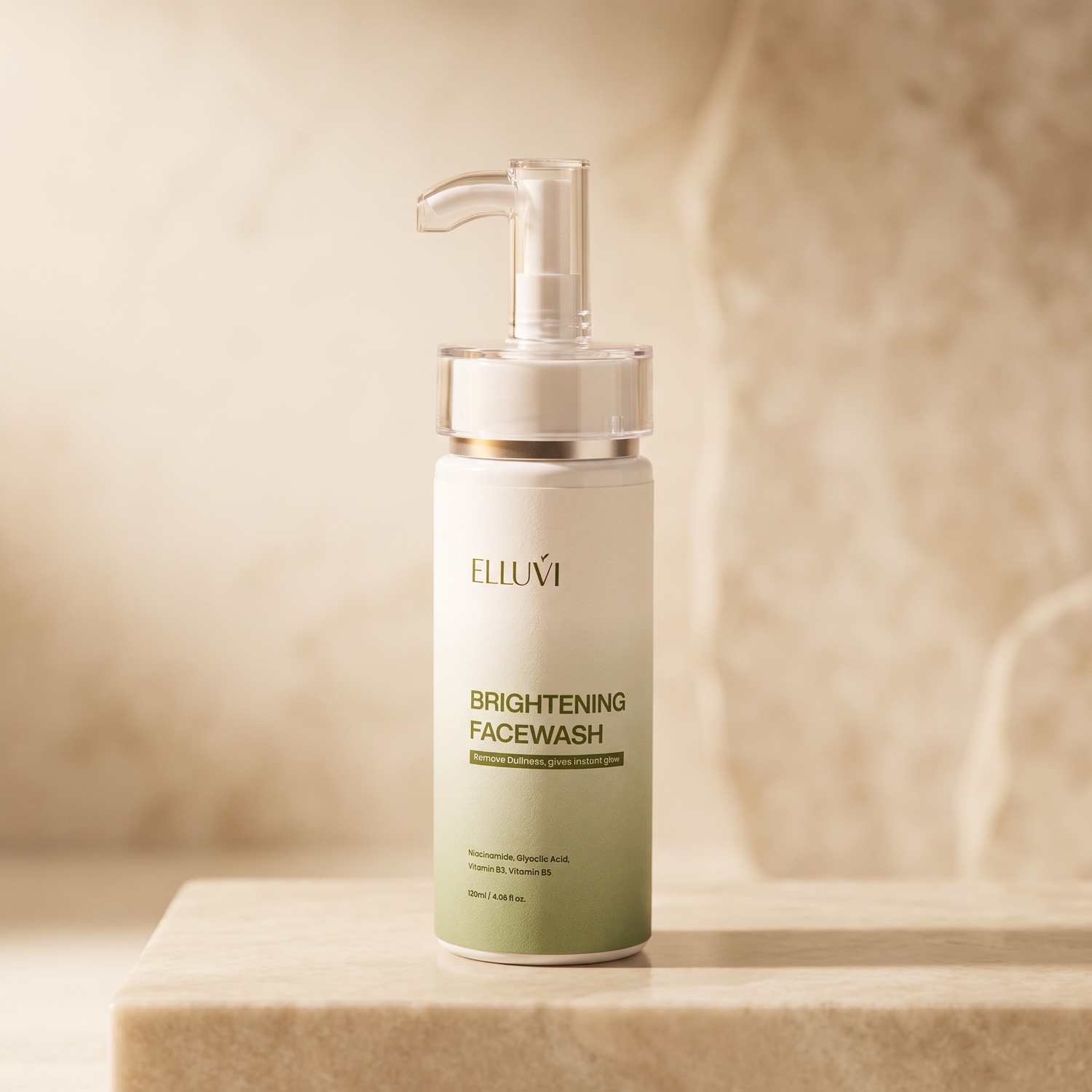
Morning: gentle cleanse, vitamin C serum, moisturiser, sunscreen. Night: cleanse, niacinamide serum, moisturiser. Add a retinoid two nights a week once the rest is comfortable.
Introduce one product at a time and give each a fortnight before adding the next. If something stings for more than a minute or leaves lasting redness, cut back the frequency rather than pushing through. Patch test first: Apply a small amount to a discreet area of the jawline once daily for 2–3 days. Stop if persistent redness, itching or irritation occurs.
Shop what this guide covers
FAQs
Pigmentation responds to three things: an active that slows pigment production, gentle exfoliation, and sunscreen every single morning. Without the third, the first two are running against a tap that stays open. Nothing here is a whitening product, and anything sold as one in Pakistan is worth reading the label of twice.