

Night creams in Pakistan compared
One question sorts this category: does the jar contain an active that has a reason to be used at night — a retinoid or an acid — or is it a moisturiser with a night label? Most night creams sold in Pakistan are the second thing, and several are marketed on brightening claims rather than on any active at all.
Prices were read from each brand's own product page on 5 September 2026, except the imported row, taken from Pakistani reseller listings the same day. What stands out reading these pages one after another is how few state a percentage for anything: of the creams below, one states its headline actives with percentages and the rest name an ingredient or a benefit and stop. A night cream that names no active is a moisturiser, which is a perfectly good thing to buy — it is just not what the price of a night cream is usually charging for.
Swipe the table sideways to see every column.
| Night cream | Overnight active | Price |
|---|---|---|
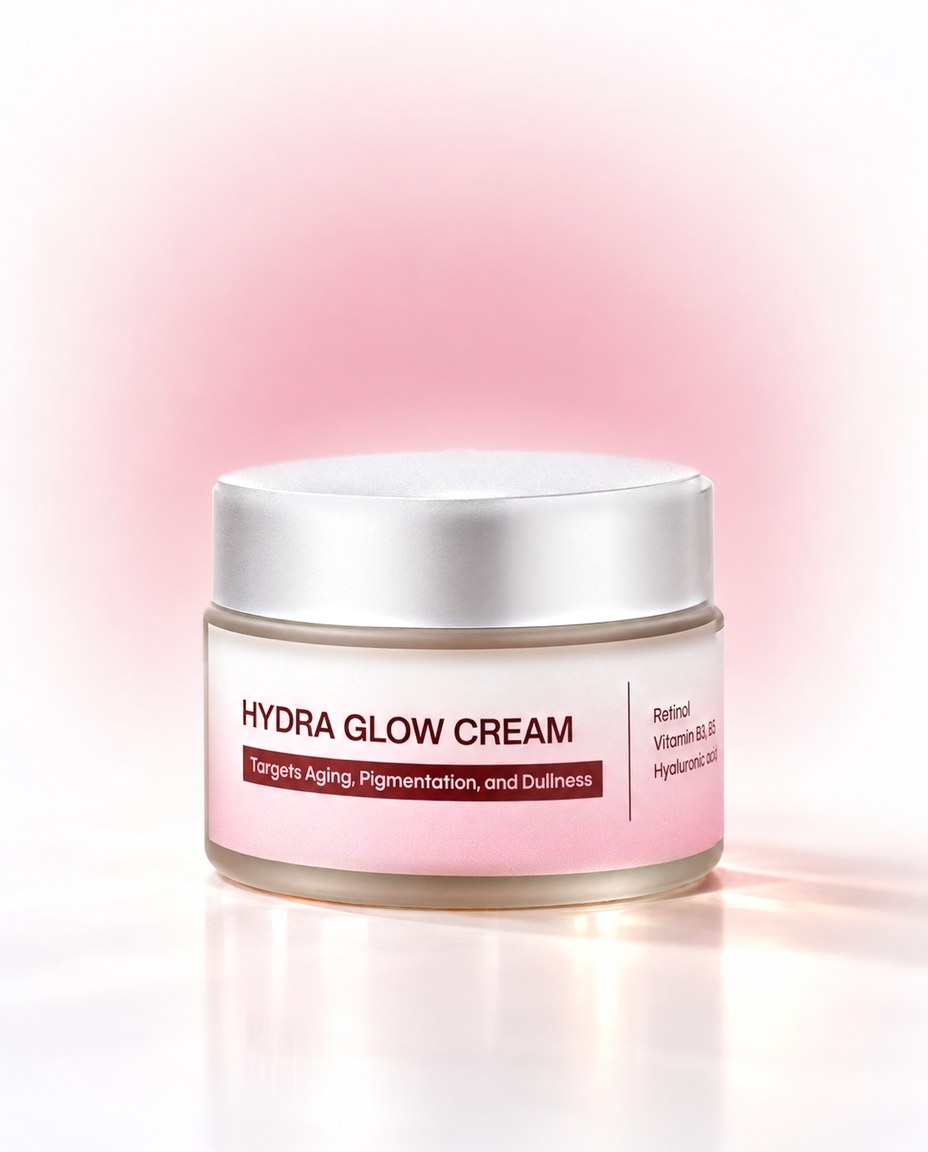
| Elluvi Hydra Glow Cream | Retinol 0.3%, stated, with niacinamide 5%, alpha arbutin 2% and kojic acid. A genuine night-only cream — retinol needs SPF the next morning. 50 ml | Rs. 1,449 (Rs. 29.0 per ml) |
| Jenpharm MandelAC Cream | Mandelic acid, an AHA with a real reason to be used at night. Percentage and size not stated on the page | Rs. 1,168 |
| Jenpharm Maxdif Brightening Cream | Marketed on brightening rather than on a named active. No actives, percentages or size stated | Rs. 1,348 |
| Saeed Ghani Anti Aging Retinol Night Cream | Retinyl palmitate, an ester weaker than retinol, at an unstated percentage. 40 g | Rs. 680 |
| Olim Naturals Retinol Cream | Retinyl palmitate, listed last on the INCI. Percentage not stated. 55 g | Rs. 560 |
| COSRX Retinol Rejuvenating Cream and other imported lines | Retinol, percentage not stated on the Pakistani listing. 20 ml, imported | Rs. 11,955 (Rs. 597.8 per ml) |
What makes a cream a night cream
One thing: an active that cannot be used comfortably in daylight. Retinol, retinaldehyde, a higher-strength AHA, or a brightening active that increases photosensitivity. A thicker texture on its own does not make a night cream.
This matters commercially, because a heavier base costs the manufacturer very little and lets a product be sold at a treatment price. Read the actives list. If the strongest thing in it is glycerin and shea butter, it is a moisturiser.
Retinol is the active with the most evidence
Retinol has the strongest evidence base of any cosmetic-grade night active for fine lines, texture and pore appearance. It works by normalising cell turnover, which takes twelve weeks or more to show.
Percentages matter but not as much as consistency. A 0.3% retinol used two to three nights a week for six months does more than a 1% used nightly for three weeks before the irritation stops it.
A night cream is not your nightly moisturiser
A retinol night cream is a treatment used two to three nights a week. On the other nights you still need a plain moisturiser. Using a treatment cream every night increases irritation without increasing results.
This is where most of the money is wasted in this category: people buy one expensive night cream, use it every night, get irritated in week three, and stop. The cheaper and better setup is one treatment cream plus one ordinary moisturiser.
What to avoid in this market
Unlabelled fairness night creams, anything promising visible whitening in seven nights, and any cream without a full INCI list and a product code. That category commonly contains steroids, hydroquinone at unregulated strength, or mercury.
Speed is the tell. Genuine tone change from a cosmetic active takes eight to twelve weeks. A cream that visibly lightens skin in a week is doing something that is not on its label, and the rebound pigmentation and thinned skin that follow are far harder to treat than the original concern.
How to introduce one without a reaction
Two nights a week for the first two weeks, then three. Apply to dry skin after cleansing, a pea-sized amount for the whole face, and follow with moisturiser if needed. Never combine two retinol products on the same night.
Mild flaking around the nose and chin in week two is common and settles. Persistent stinging, redness that lasts into the next day, or peeling is too much too fast — drop back a night rather than stopping.
Sunscreen is what makes a night cream work
Retinol and brightening actives increase sun sensitivity, and UV undoes the tone work they do. Without a daily sunscreen a night cream is close to pointless in Pakistan's UV levels.
Sunscreen is not currently sold by Elluvi. Use a broad-spectrum SPF 50 from a trusted brand every morning.
What a night cream should cost
Rs. 1,200 to Rs. 2,500 for a locally formulated cream with a stated retinol percentage and supporting actives. Below Rs. 800 you are usually buying a heavy moisturiser. Above Rs. 4,000 you are usually paying import cost.
Size is misleading in this category in your favour. A 50 ml treatment cream used two to three nights a week lasts much longer than a 50 ml daily moisturiser, so cost per use is lower than the sticker price suggests.
Night cream prices in Pakistan, by tier
Below Rs. 800 is a moisturiser in a night jar. Rs. 1,200 to Rs. 2,500 is where locally formulated creams with a stated retinoid percentage sit. Above Rs. 4,000 is almost entirely import cost, not a better formula.
The number that matters is cost per night, not the price on the jar, because a retinoid cream is used two or three nights a week rather than daily. A 50 ml jar at Rs. 1,449 works out at Rs. 29 a millilitre, and a pea-sized amount is about a third of a millilitre, so roughly Rs. 10 a night; at two to three nights a week the jar lasts well over six months. A Rs. 700 night cream used every night for two months costs more per month and contains no active. Compare millilitres, frequency and the stated percentage together, and the cheap jar usually stops looking cheap.
Swipe the table sideways to see every column.
| Price | What is usually inside | Worth it |
|---|---|---|
| Under Rs. 800 | A thicker moisturiser. Often no active named, or an ingredient named with no percentage | As a moisturiser, yes. As a treatment, no |
| Rs. 1,200 to Rs. 2,500 | Locally formulated, retinoid or acid based, percentage stated on the better ones | This is the tier to buy in |
| Rs. 2,500 to Rs. 4,000 | Imported mid-market, or local with a heavier fragrance and packaging spend | Sometimes, check the INCI list before the price |
| Above Rs. 4,000 | Import duty, freight and brand. The actives are rarely stronger than the tier below | Rarely |
A shortlist, rather than a top ten
Three questions cut the category down faster than any ranked list. Does it name an overnight active, does it state a percentage, and is there a full INCI list and a product code on the pack. Most night creams sold here fail at the second question.
Ranked lists of ten night creams are written to fill a page, and a ranking is not something you can check. The three questions above are what a list would have to answer anyway, and you can run them yourself on any product page in under a minute. If a cream names retinol, mandelic acid, glycolic acid or an azelaic derivative and states how much of it is in there, it belongs on your shortlist. If it names a benefit rather than an ingredient, it does not, whatever the price.
Dry skin, oily skin and the mistake each one makes
Dry skin needs a night cream with occlusion as well as an active, so a retinoid in a richer base works. Oily skin needs the same active in a lighter vehicle, and the usual mistake is to skip a night cream entirely and let the skin get more oily, not less.
On dry skin the failure mode is irritation. A retinoid on a compromised barrier stings, flakes and gets abandoned in week two, so the fix is to get the barrier comfortable first with a plain moisturiser for a fortnight, then introduce the active two to three nights a week over the top of it. On oily skin the failure mode is avoidance. Oily skin still loses water overnight, and stripping it dry drives more oil production, so the answer is a lighter texture used two or three nights a week rather than nothing at all. Neither skin type needs a different active. They need the same active carried differently and introduced at a different speed.
What Elluvi sells
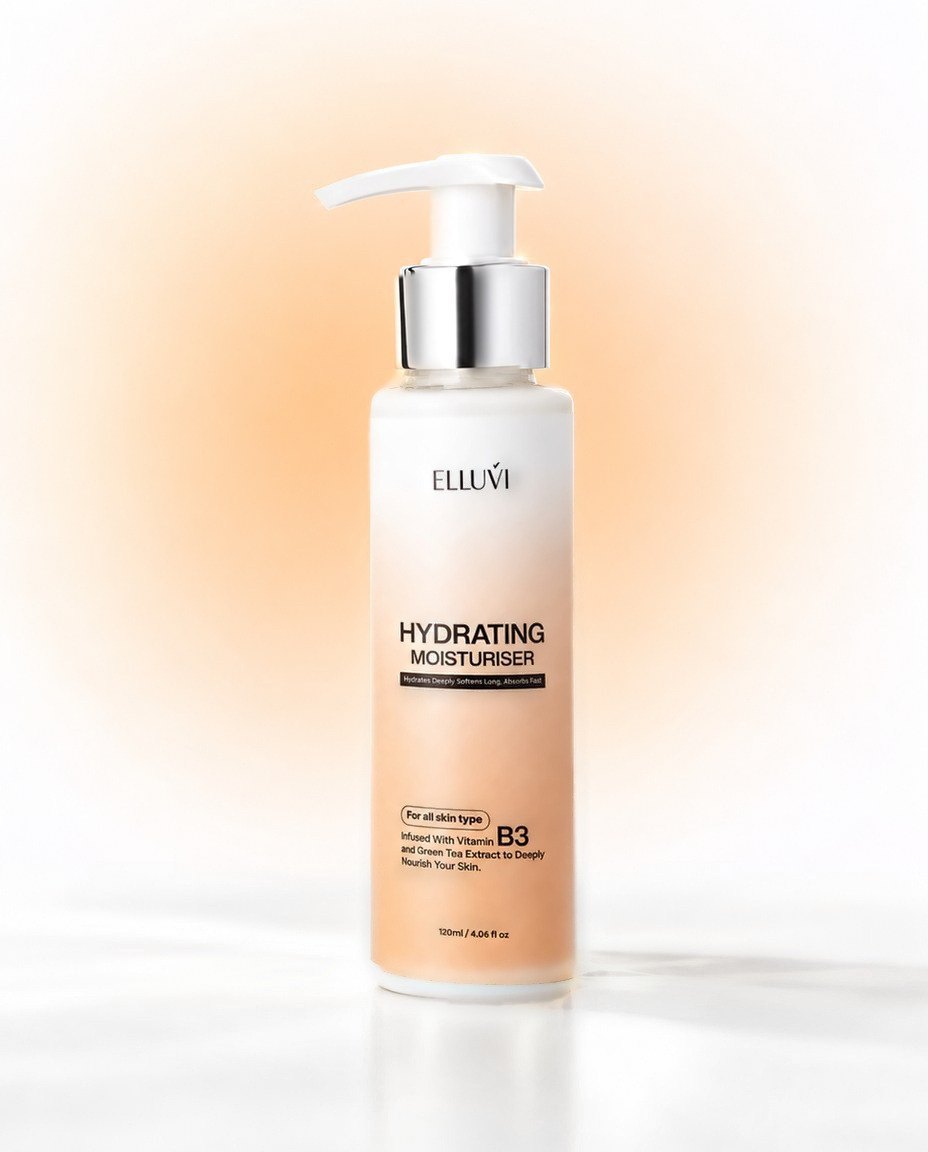
Hydra Glow Cream, Rs. 1,449 for 50 ml: 0.3% retinol, 5% niacinamide, 2% alpha arbutin, 1% coenzyme Q10 and 0.5% hyaluronic acid, with kojic acid. Used two to three nights a week, with Hydrating Moisturiser at Rs. 1,249 on the remaining nights.
Age Defying Serum at Rs. 1,299 for 30 ml is also retinol-based, with niacinamide 5%, alpha arbutin 2% and a peptide complex, and is aimed at experienced retinol users. Do not use it and Hydra Glow Cream on the same night. Use one or the other; if you alternate them, every night of either is a retinol night, so keep to two to three nights a week at the start. Apply a small amount to a discreet area of the jawline once daily for 2–3 days. Stop if persistent redness, itching or irritation occurs.
Shop what this guide covers
FAQs
Two ways to take the same active. Hydra Glow Cream is retinol 0.3% in a rich overnight base, with niacinamide, alpha arbutin and kojic acid alongside it. The Age Defying Serum carries the same retinol, niacinamide, alpha arbutin and kojic acid in a serum, plus a Matrixyl 3000 peptide complex, and is for people who already use retinol. Both are night-only, and you use one of them on a given night, never both.