
Vitamin C serum prices in Pakistan, brand by brand
Locally made and mass-market serums sit around Rs. 400 to Rs. 1,900. Imported Indian brands run Rs. 2,000 to Rs. 4,500. Western imports run Rs. 5,000 to Rs. 12,000 and up. The active inside does not scale with any of that.
Prices below are typical Pakistan retail for a 30 ml bottle and move with the exchange rate, the seller and the batch. Formulations also change between versions of the same product, so read the ingredient list on the pack of any other brand you are actually buying.
Swipe the table sideways to see every column.
| Serum | Vitamin C form | Percentage stated? | Typical price in Pakistan |
|---|---|---|---|
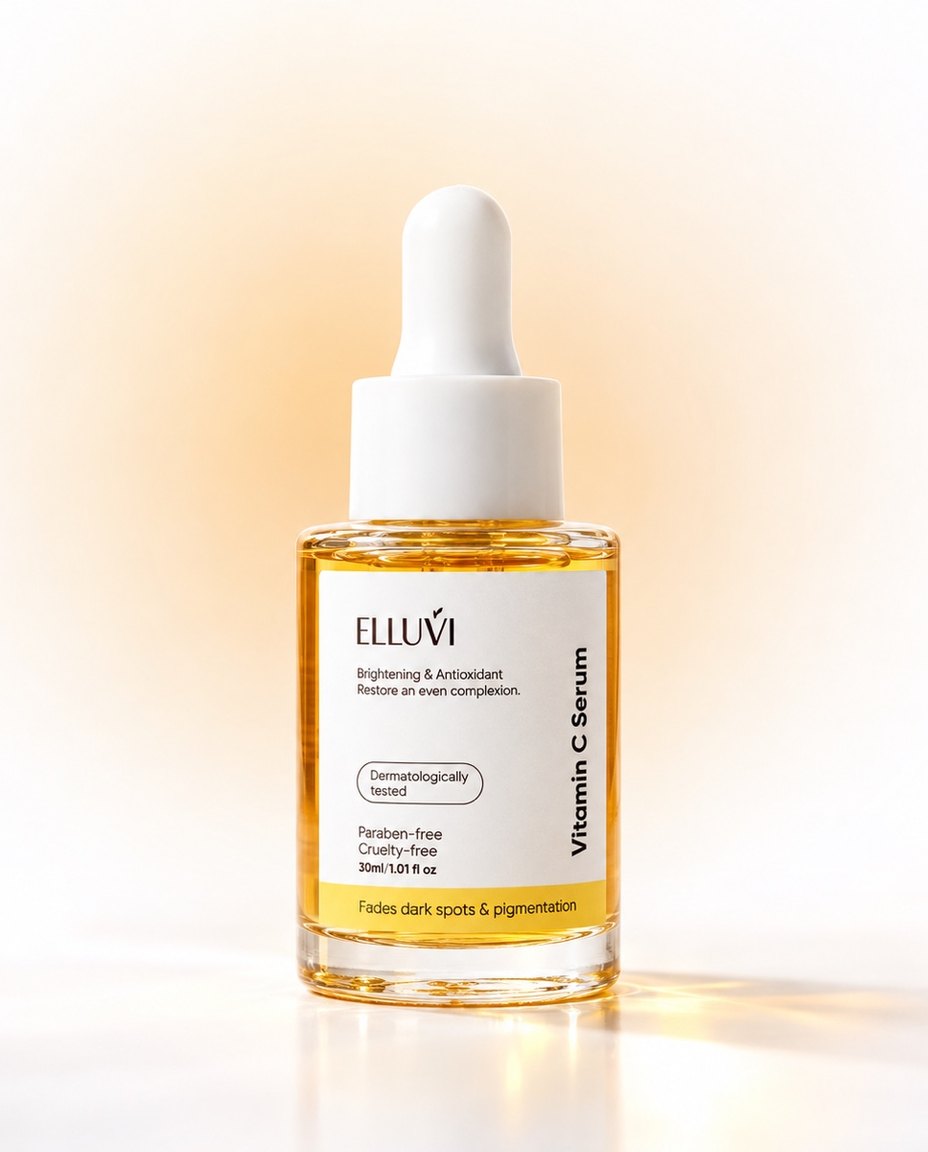
| Elluvi Vitamin C Serum | 3-O-ethyl ascorbic acid, with 0.5% hyaluronic acid, pH 5.0 | Yes — 10% | Rs. 1,299 |
| Dr Rashel Vitamin C Serum | Usually unspecified on the pack | Often no | Rs. 400–900 |
| Garnier Bright Complete Vitamin C Serum | A vitamin C derivative, with niacinamide and salicylic acid | No single figure | Rs. 1,200–1,900 |
| Minimalist Vitamin C | Ethyl ascorbic acid, a stable derivative | Yes — 10% or 16% | Rs. 2,000–3,500 imported |
| Deconstruct Vitamin C Serum | Ethyl ascorbic acid, a stable derivative | Yes — 15% | Rs. 2,200–3,800 imported |
| The Ordinary vitamin C range | Several — L-ascorbic acid suspension, ascorbyl glucoside, MAP | Yes, on every version | Rs. 2,500–5,500 imported |
| L'Oréal Revitalift Clinical Vitamin C | L-ascorbic acid | Yes — 12% | Rs. 5,000–9,000 imported |
| Unbranded marketplace serums | Unspecified; sometimes no vitamin C detectable in the INCI list | No | Rs. 250–600 |
The form matters more than the price
L-ascorbic acid is the form with the strongest evidence and the worst stability. Derivatives — ethyl ascorbic acid, sodium ascorbyl phosphate, magnesium ascorbyl phosphate, ascorbyl glucoside — are far more stable but need conversion in the skin and work more gently. A cheap derivative serum can outperform an expensive ascorbic acid one that has gone off.
This is why brand-to-brand price comparison misleads. A Rs. 1,200 derivative serum and a Rs. 8,000 ascorbic acid serum are not the same product graded by budget; they are two different bets. If you want the strongest evidence, buy ascorbic acid and treat it as perishable. If you want something that survives a Pakistani summer in a bathroom cupboard, a stable derivative is the better choice, and it is the one we use.
What Rs. 400 buys, and why it is usually not vitamin C
At the bottom of the market the ingredient list often contains no vitamin C in any form, or contains it after the preservative, which means a trace. A stated percentage and a full INCI list are the minimum before price is worth discussing at all.
Vitamin C is not an expensive raw material, so a genuinely dosed serum is affordable to make. What makes cheap vitamin C serums cheap is usually not the active but everything around it: no stability testing, clear plastic packaging, an open-mouth bottle instead of a dropper, and no batch dating. Each of those shortens the life of the formula, which is the one thing this ingredient cannot afford.
What you are paying for above Rs. 5,000
Import duty, sales tax, freight, distributor margin and the exchange rate — roughly doubling to tripling the original price before anyone in Pakistan touches it. Plus, on the better lines, real stability testing and airless or opaque packaging.
The packaging part is worth paying something for with this ingredient specifically, in a way it is not with niacinamide. An ascorbic acid serum in a clear bottle on a lit shelf is degrading while you look at it. But you are not paying five times as much for five times the packaging, and the import chain is most of the gap.
Cost per day is the honest comparison
A 30 ml serum at two to three drops each morning holds roughly 200 applications, so it lasts about six months. At Rs. 1,299 that is about Rs. 6 to 7 a day. Convert every price to cost per millilitre before deciding anything is cheap — a 15 ml bottle at Rs. 900 costs more per use than a 30 ml at Rs. 1,299.
There is a second correction specific to vitamin C: if you do not finish the bottle before it oxidises, your real cost per day is higher than the arithmetic, because you paid for millilitres you threw away. This is the argument against buying the largest bottle on offer. Keep it capped and out of heat and light, and buy a size you will finish within the period-after-opening on its label.
The bottle you are sold may already be old
Vitamin C degrades in the warehouse, in transit and on the shelf, not just after you open it. Check the batch or manufacture date, not only the expiry, and refuse a serum that has gone from clear or pale yellow to deep orange or brown.
Grey-market imports are the highest risk here, because the same bottle may have spent months in unairconditioned storage in two countries. This is the case where an imported serum at Rs. 6,000 can be genuinely worse value than a local one at Rs. 1,299 — not because the formula is worse, but because you have no idea how long it has been degrading.
The cheapest listing is usually the worst buy
A price well below every other seller normally means grey stock, a batch near or past expiry, or a counterfeit. With vitamin C the failure is silent: the serum looks like a serum, applies like a serum, and does nothing.
Buying from the brand or an authorised stockist costs slightly more and removes the question. For a product used every morning for months, that is a reasonable trade.
Vitamin C serums under Rs. 1,500 in Pakistan
Under Rs. 1,500 the choice is narrow, and only one serum on this list states both its form and its percentage. Elluvi Vitamin C Serum is Rs. 1,299 for 30 ml with 10% 3-O-ethyl ascorbic acid, a stable form, at pH 5.0. Garnier Bright Complete starts around Rs. 1,200 and gives no single vitamin C figure, and Dr Rashel at Rs. 400 to Rs. 900 usually does not name the form at all.
Swipe the table sideways to see every column.
| Serum | Form and percentage | Price |
|---|---|---|
| Elluvi Vitamin C Serum | 3-O-ethyl ascorbic acid 10%, stated, with 0.5% hyaluronic acid, pH 5.0 | Rs. 1,299 |
| Garnier Bright Complete Vitamin C Serum | A vitamin C derivative with niacinamide and salicylic acid; no single figure | Rs. 1,200–1,900 |
| Dr Rashel Vitamin C Serum | Form usually unspecified on the pack; percentage often not stated | Rs. 400–900 |
| Unbranded marketplace serums | Unspecified; sometimes no vitamin C detectable in the INCI list | Rs. 250–600 |
What Elluvi charges
Vitamin C Serum, Rs. 1,299 for 30 ml: 10% 3-O-ethyl ascorbic acid with 0.5% hyaluronic acid at pH 5.0. The form, the percentage and the pH are all published on the product page, and the serum ships from Lahore.
Ten percent is a deliberate choice rather than a budget one. The 20% and 23% figures used as selling points are L-ascorbic acid numbers, where irritation and oxidation climb with strength; a stable derivative at 10% is gentler to use every morning and holds up better in Pakistani heat. Cash on Delivery is available across Pakistan.
What a realistic budget covers
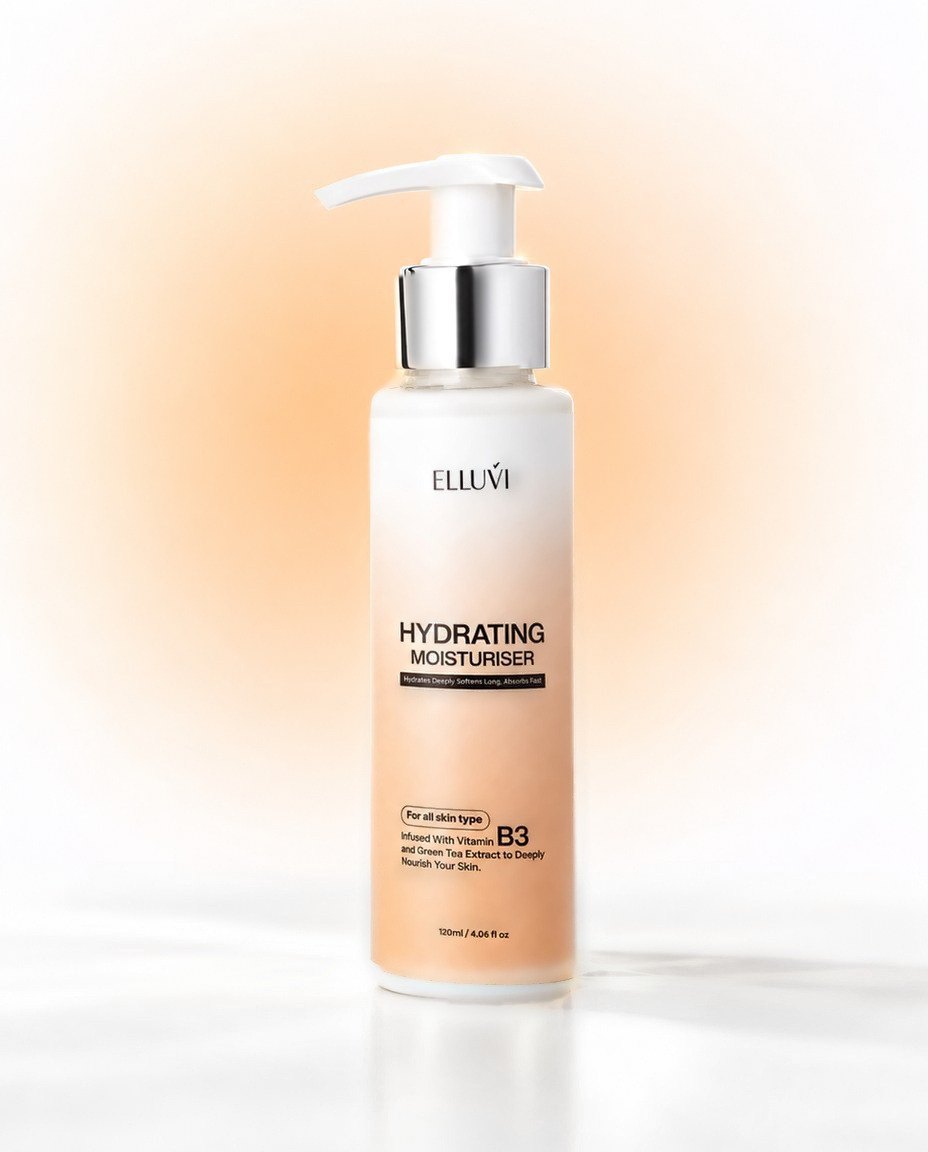
Around Rs. 1,300: one properly dosed vitamin C serum for two months of daily morning use. Around Rs. 2,600: that serum plus a moisturiser, which is a complete morning routine bar sunscreen. Under Rs. 700: buy sunscreen instead — for dark spots it does more than any vitamin C serum at that price.
That last line is the one worth taking seriously. Vitamin C without daily SPF is largely wasted effort on pigmentation, so if the budget only stretches to one of the two, it is not a close call. Apply a small amount to a discreet area of the jawline once daily for 2–3 days. Stop if persistent redness, itching or irritation occurs.