
What is a vitamin C serum?
A serum that delivers vitamin C, or a stable form of it, to the skin at a stated strength, usually 10 to 20%. It brightens dull skin, fades the look of recent dark marks over weeks, and as an antioxidant it helps sunscreen limit the damage daily sun does. It is not a sunscreen and does not replace one.
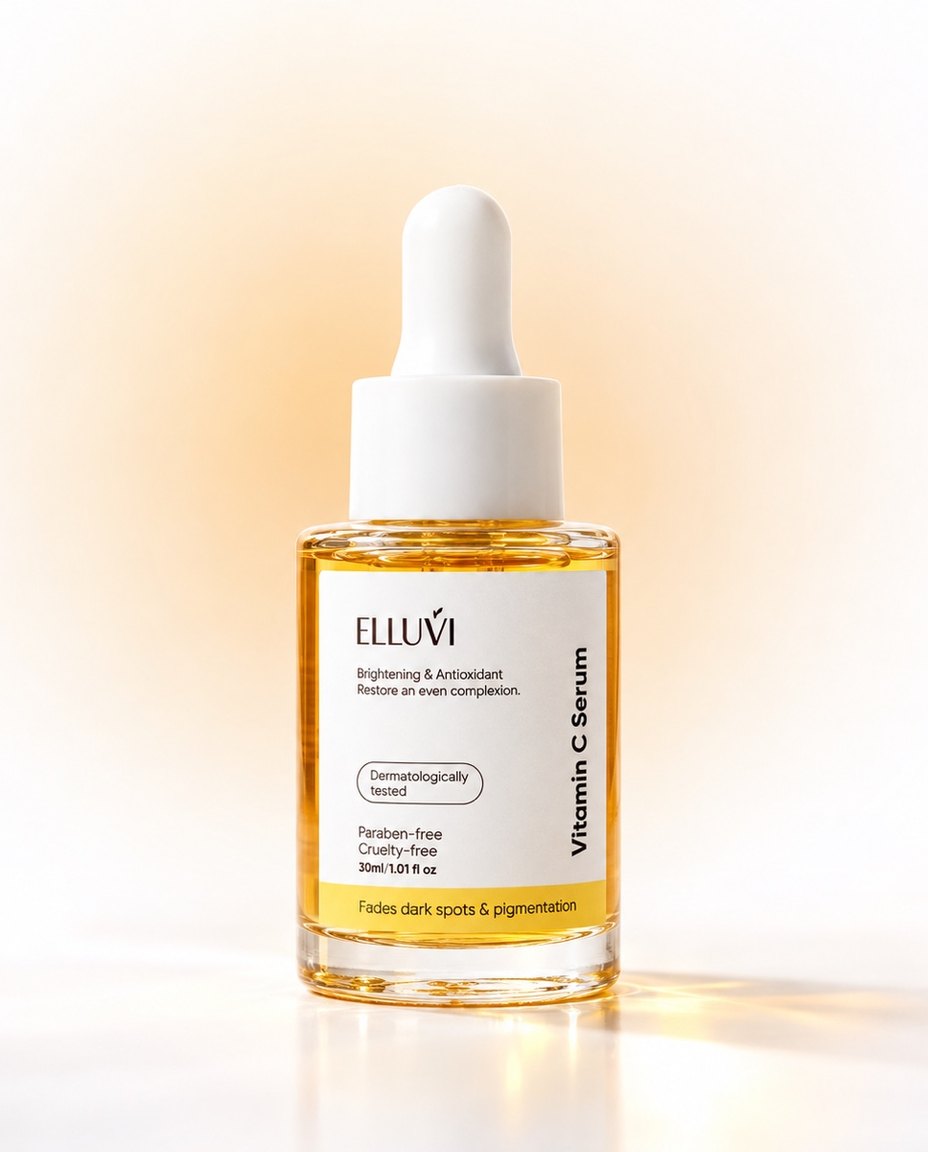
There are two families. Pure L-ascorbic acid is the strongest and the least stable: in heat and light it oxidises and turns orange-brown, which matters in a Pakistani summer. Derivatives such as 3-O-ethyl ascorbic acid and sodium ascorbyl phosphate are far more stable and gentler, and are the practical choice for most skin here. Elluvi Vitamin C Serum uses 10% 3-O-ethyl ascorbic acid with 0.5% hyaluronic acid, fragrance-free.
How to apply vitamin C serum, step by step
In the morning: wash your face, pat it dry, apply two to three drops and press them over the face and neck, wait about a minute, then moisturiser, then SPF 50. That order, thinnest to thickest with sunscreen last, is the whole method.
1. Cleanse with a gentle face wash and pat dry; vitamin C goes on dry skin, not wet. 2. Two to three drops into the fingertips, pressed over face and neck. More is not better. 3. Give it about a minute to absorb. 4. Moisturiser next. If you also use a niacinamide serum, it can go between the two. 5. SPF 50 last, every morning, even indoors near windows.
Morning or night?
Morning. Vitamin C works as an antioxidant during the hours your skin meets sun and pollution, and it makes your sunscreen work harder. Using it at night is not harmful, but it leaves that job undone and puts it in the same window as retinol, which is the one pairing to keep apart.
What you can and cannot mix with vitamin C
Niacinamide, hyaluronic acid, moisturisers and sunscreen all layer fine with vitamin C. Keep retinol to the night and vitamin C to the morning. Benzoyl peroxide and strong leave-on acid toners go on a different time of day. Face washes with glycolic or salicylic acid are rinsed off and do not clash.
Swipe the table sideways to see every column.
| Product | With vitamin C? | How |
|---|---|---|
| Niacinamide serum | Yes | Same morning, vitamin C first |
| Hyaluronic acid, moisturiser | Yes | After vitamin C |
| Sunscreen | Yes, essential | Last step every morning |
| Retinol cream or serum | Not together | Vitamin C morning, retinol night |
| Glycolic or salicylic face wash | Yes | Wash first, rinse, then vitamin C |
| Leave-on AHA/BHA toner | Separate | Toner at night, vitamin C morning |
| Benzoyl peroxide | Separate | Different time of day |
| Azelaic acid (Skinoren etc.) | Usually yes | Alternate if skin stings |
Side effects, and does vitamin C cause breakouts?
A mild tingle in the first few days is common. Redness or stinging that keeps coming back means the skin needs it every other day for longer. Vitamin C is not an ingredient that causes purging, so a crop of new spots after starting is a reaction, a heavy routine around it, or coincidence; stop, patch test, and reintroduce slowly.
Derivatives such as 3-O-ethyl ascorbic acid are gentler than pure L-ascorbic acid, which is why they suit sensitive and reactive skin better. Apply a small amount to a discreet area of the jawline once daily for 2–3 days. Stop if persistent redness, itching or irritation occurs. Vitamin C is generally considered fine during pregnancy and breastfeeding; check with your doctor before starting any new product.
How long until you see results
Brightness in two to four weeks, recent marks in four to six, older dark spots in eight to twelve, and only with sunscreen every morning. Without SPF, new pigment forms faster than vitamin C can fade it, and the serum gets blamed for the sun.
Shop what this guide covers
FAQs
Vitamin C is an antioxidant used in the morning to help brighten dullness and fade the look of dark spots and post-pimple marks over weeks of daily use. Elluvi's Vitamin C Serum uses 10% ethyl ascorbic acid, a stable form that is gentler than pure L-ascorbic acid, with ferulic acid and hyaluronic acid. Apply it on clean skin, then moisturizer, then sunscreen.