
The short answer
They can be used together, in either order, in the same routine. Modern formulations are stabilised and buffered, and the interaction described in the myth requires conditions that do not exist on skin.
If you already own both and they suit you, keep using them. There is no reason to buy a second routine to keep them apart.
Where the myth came from
Research from the 1960s found that pure niacinamide and pure ascorbic acid, combined in water and heated, converted partly to niacin — which causes temporary flushing. That study used raw materials at high temperature, not finished cosmetics.
Cosmetic formulas contain stabilisers, buffers and much lower water activity, and they sit on a face at roughly 32 degrees rather than in a heated flask. The reaction is negligible under those conditions.
What can genuinely happen
A small number of people get temporary flushing — warmth and pinkness for ten to twenty minutes — when layering the two. It is harmless and settles. If it bothers you, split them across the day.
The more common cause of discomfort is not the combination at all but a low-pH vitamin C on a compromised barrier. If your skin stings with vitamin C alone, the niacinamide is not the problem.
What each one actually does
Vitamin C is an antioxidant that reduces UV-driven free radical damage and helps with dullness and post-blemish marks. Niacinamide reduces sebum output, supports the barrier and evens tone. They overlap on tone and differ everywhere else.
That overlap is why they combine usefully rather than redundantly. Vitamin C works on the damage side and niacinamide on the barrier and oil side, and both contribute to the same visible outcome.
How to layer them
Vitamin C first on clean, dry skin, wait until it absorbs, then niacinamide, then moisturiser. Order matters less than most guides claim, but lower-pH products first is the general convention.
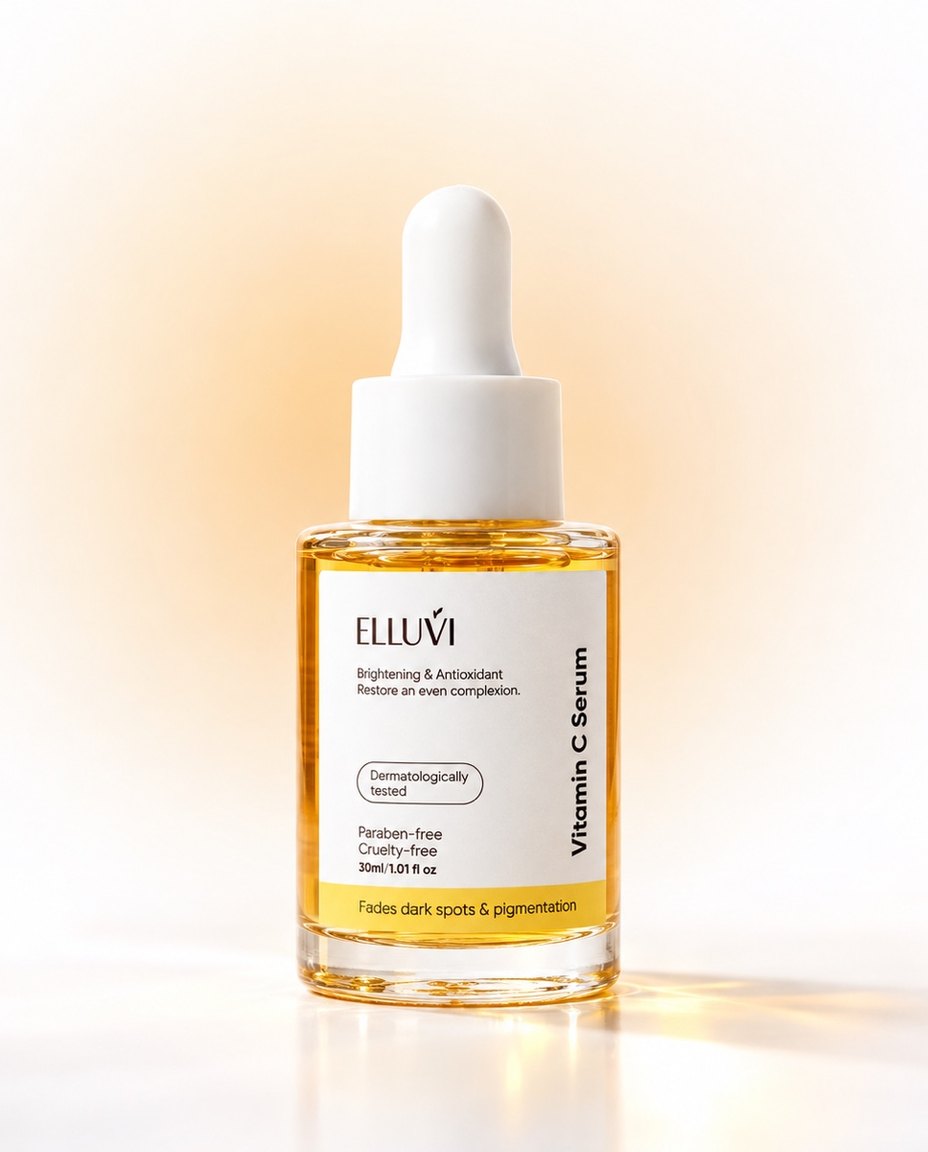
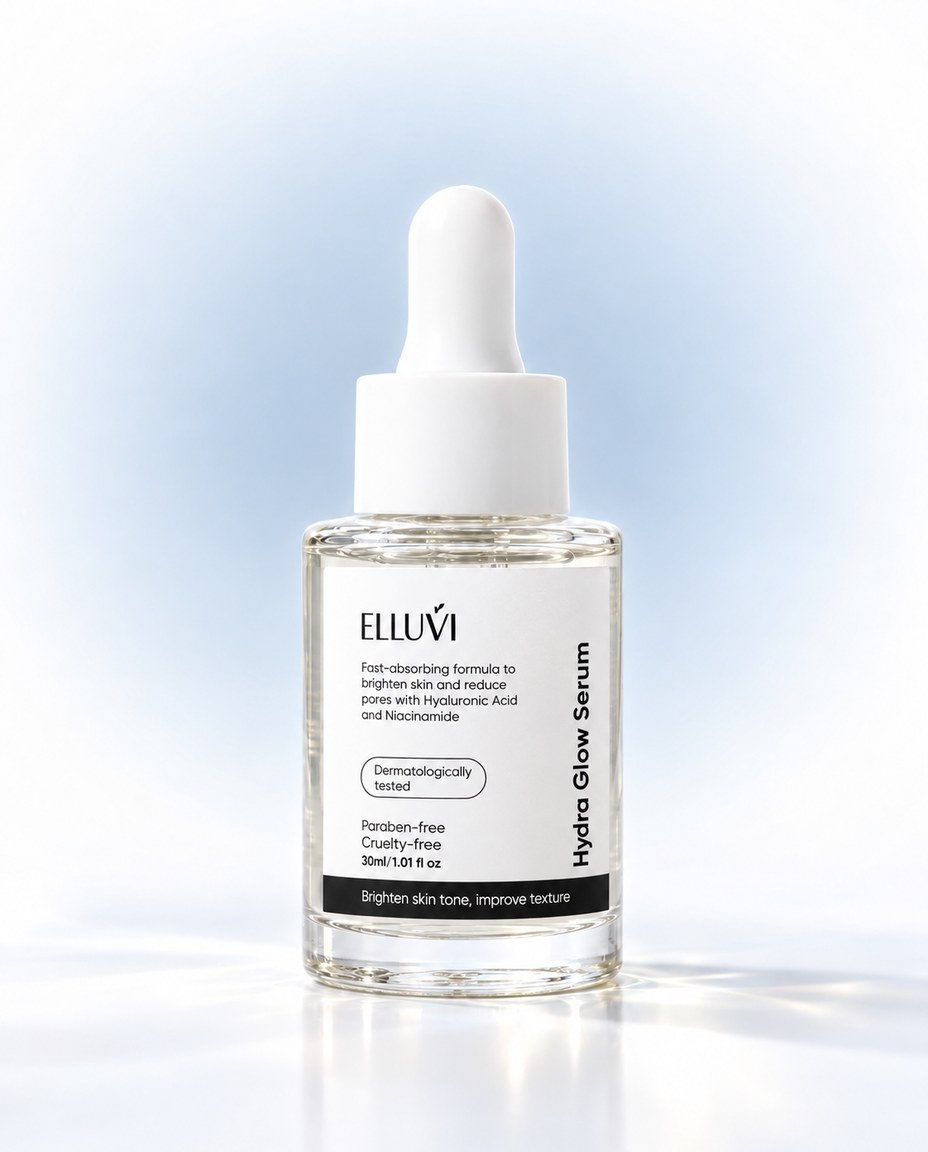
If you would rather keep it simple, use a single serum containing both. Elluvi does not sell one — Vitamin C Serum is 10% 3-O-ethyl ascorbic acid with hyaluronic acid, Hydra Glow Serum is 10% niacinamide with zinc PCA — so layering is how it is done here.
The split-across-the-day option
Vitamin C in the morning, where its antioxidant effect complements sunscreen. Niacinamide at night. This is a good default even without any interaction concern, because it puts each active where it does most good.
Elluvi Vitamin C Serum at Rs. 1,299 for 30 ml in the morning and Hydra Glow Serum at Rs. 1,149 for 30 ml at night is exactly that setup, and it also makes each 30 ml bottle last twice as long.
Which other combinations to actually worry about
Two retinol products on the same night. Retinol plus a leave-on acid on the same night. Benzoyl peroxide with certain retinoids in the same application. Those are real; niacinamide with vitamin C is not.
Niacinamide is the most cooperative active in a routine — it layers fine with acids, retinoids and vitamin C, and often reduces the irritation of the first two.
Swipe the table sideways to see every column.
| Pair | Verdict | What to do |
|---|---|---|
| Niacinamide and vitamin C | Fine together | Layer in either order. The warning comes from 1960s work on raw ingredients heated in a lab, not from serums on a face |
| Retinol and an exfoliating acid | Separate them | Different nights. Both increase turnover, and together they are the most common cause of a damaged barrier |
| Retinol and vitamin C | Separate by time of day | Vitamin C in the morning, retinol at night. Not because they react, but because each works best in its own half of the day |
| Benzoyl peroxide and retinol | Separate them | Benzoyl peroxide oxidises retinol. Alternate nights, or use one morning and one night |
| Two acids at once | Pick one | Glycolic and salicylic do different jobs but stack their irritation. One at a time, and never on a retinol night |
| Anything new, plus anything else new | Separate them | Add one product every two weeks at most. If two start together and something stings, you cannot tell which to stop |
How to introduce both
One at a time, two weeks apart. Start with niacinamide, which is the more tolerant of the two, then add vitamin C. Adding both at once leaves you unable to tell which one caused a reaction.
Apply a small amount to a discreet area of the jawline once daily for 2–3 days. Stop if persistent redness, itching or irritation occurs.