Kojic acid vs alpha arbutin in Pakistan: same target, different temperament
Both slow tyrosinase, the enzyme that makes melanin, which is why every Pakistani pharmacy shelf carries them side by side. Kojic acid acts faster and irritates more, and it oxidises — the cream browning in the jar is the active degrading. Alpha arbutin is slower, gentler, and stable enough to use for years. Neither is stronger in any sense that matters; they suit different skins and different timelines.
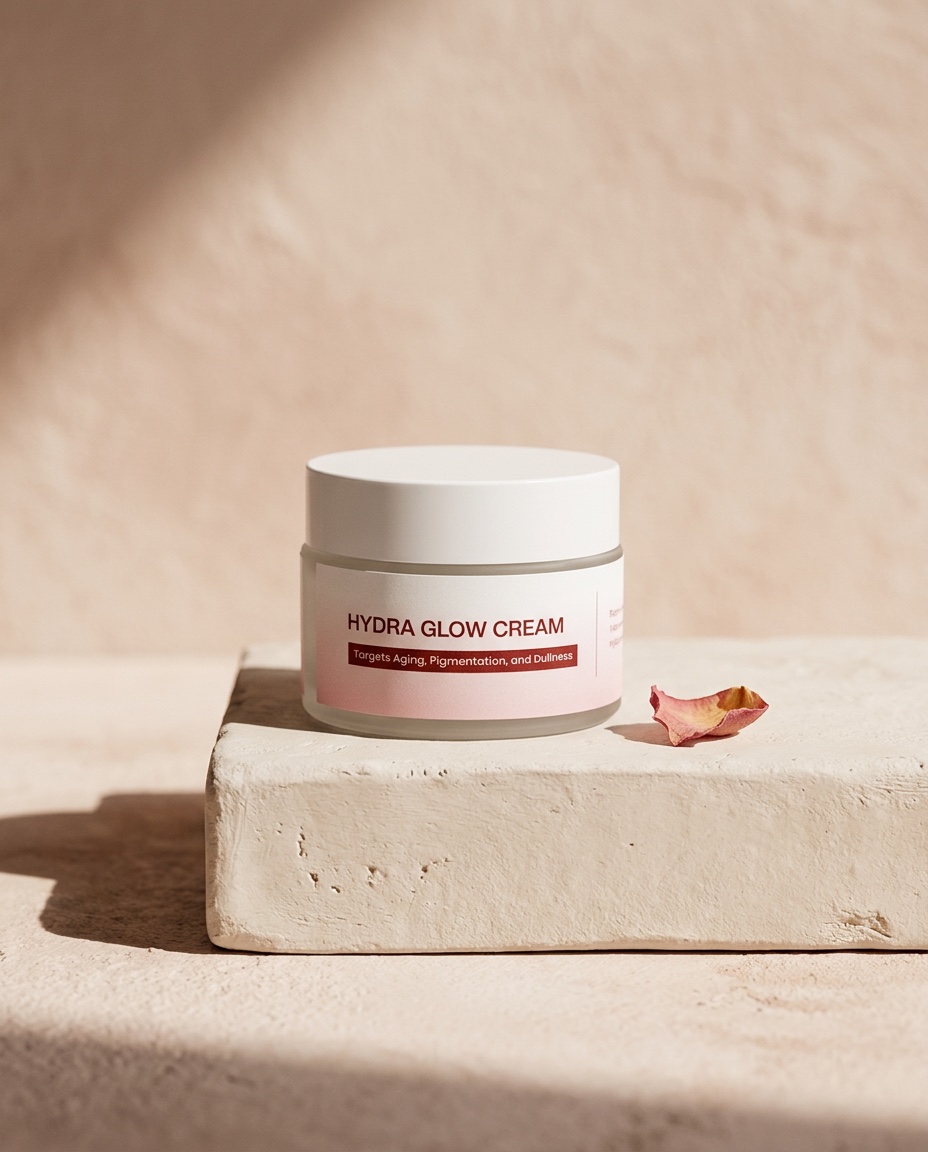
Elluvi does not make a kojic acid product. Alpha arbutin 2% is what we use for the same job, in Hydra Glow Cream. This page explains where kojic acid is the better choice and where it is not.
Reviewed
See the matching concern routineThe comparison, on the things that matter
Kojic acid shows change in four to eight weeks and is the more irritating of the two. Alpha arbutin takes eight to twelve weeks and can be used indefinitely. If your skin is already reactive, or you are treating melasma that will need months of work, arbutin is the one that survives the course.
| Kojic acid | Alpha arbutin | |
|---|---|---|
| Typical strength | 1-2% in creams sold here | 1-2% |
| First visible change | 4-8 weeks | 8-12 weeks |
| How long you can use it | Cycles, with breaks | Indefinitely |
| Irritation | Common; stinging and redness | Uncommon |
| Stability | Oxidises — browns in the jar | Stable |
| Sensitisation risk | Contact dermatitis reported | Low |
| Status in Pakistan | Cosmetic, widely sold | Cosmetic, widely sold |
Why kojic acid creams turn brown
Kojic acid oxidises on contact with air and light. A cream that has gone from white to tan has lost potency, and the colour change is the only warning you get. Buy it in an opaque tube rather than a clear jar, keep it out of a sunlit bathroom, and treat a browned cream as finished rather than as still working.
This is the practical difference between the two actives and it is rarely mentioned on the packaging. Alpha arbutin does not do this, which is part of why it is the one formulators reach for when a product has to sit on a shelf in Pakistani heat before anyone opens it.
Which one for which problem
For post-acne marks and scattered dark spots, either works and kojic acid gets there sooner. For melasma, alpha arbutin is the better long-run choice because melasma needs months and recurs, and a course you have to stop for irritation is a course that fails. For skin that already reacts to actives, arbutin, and only arbutin.
Neither touches a depressed or rolling acne scar — that is a change in the shape of the skin, not its colour, and no topical reaches it. Neither works at all without daily sunscreen, because UV is what is driving the pigment in the first place. We do not sell a sunscreen; buy any SPF 50 you will actually reapply, and understand that without it both of these actives are undoing their own work every morning.
Can you use them together?
Yes, and layered products often do — but start one at a time. Introducing both in the same week means that if your skin reacts you will not know which one to drop. Give the first four weeks before adding anything.
What Elluvi uses, and why
Alpha arbutin 2%, stated, in Hydra Glow Cream at Rs. 1,449, alongside niacinamide 5% and retinol 0.3%. We do not make a kojic acid product. The reason is stability and tolerance rather than efficacy: kojic acid degrades in the jar and is the more common cause of a stinging complaint, and a product people stop using in week three treats nothing.
If you specifically want kojic acid, buy one — it is a legitimate active with real evidence behind it, and this page is not an argument against it. Check that the percentage is printed, that the packaging is opaque, and that the cream is still the colour it was sold as.