Glycolic acid serum in Pakistan: dullness, texture and the numbers that matter
Glycolic acid is the smallest AHA, which is why it penetrates well and why it stings. It works on the skin's surface — dullness, rough texture and uneven tone — rather than inside the pore. Elluvi does not make a glycolic serum, but does put 5% glycolic acid in its face wash. This page explains when a serum is worth it and when the cleanser is enough.
Elluvi puts glycolic acid in a face wash rather than a serum, at 5%, rinsed off after twenty seconds. That is a gentler exposure than a leave-on serum, which suits most people here and will be too little for some.
Reviewed

What glycolic acid does
Glycolic acid loosens the bonds holding dead cells to the skin's surface, so they shed instead of accumulating. That accumulation is what makes skin look dull, feel rough and reflect light unevenly.
It is the smallest molecule in the AHA family, so it penetrates more readily than lactic or mandelic acid. That is both its advantage and the reason it is the most likely AHA to irritate.
Surface, not pore
Glycolic acid is water-soluble, so it works across the surface of the skin. It does not get inside an oil-blocked pore. For blackheads and congestion you want salicylic acid instead.
This is the single most useful distinction in acid exfoliation, and the one most product marketing blurs. Dull and rough is an AHA problem. Blocked and bumpy is a BHA problem.
Percentage and pH
Daily leave-on glycolic acid usually sits between 5% and 10%, at a pH around 3.5 to 4. Free-acid availability matters as much as the headline percentage, which is why pH belongs on the label.
A 10% glycolic serum at pH 5 is far weaker than a 5% one at pH 3.5, because at higher pH much of the acid is neutralised. A brand that publishes a percentage but not a pH has told you half the story.
Why a glycolic cleanser is often the better buy
A glycolic serum stays on for hours and delivers more, but also carries more irritation risk. A glycolic cleanser gives you gentler, more forgiving exposure, which for most people in a hot climate is the more sustainable choice.
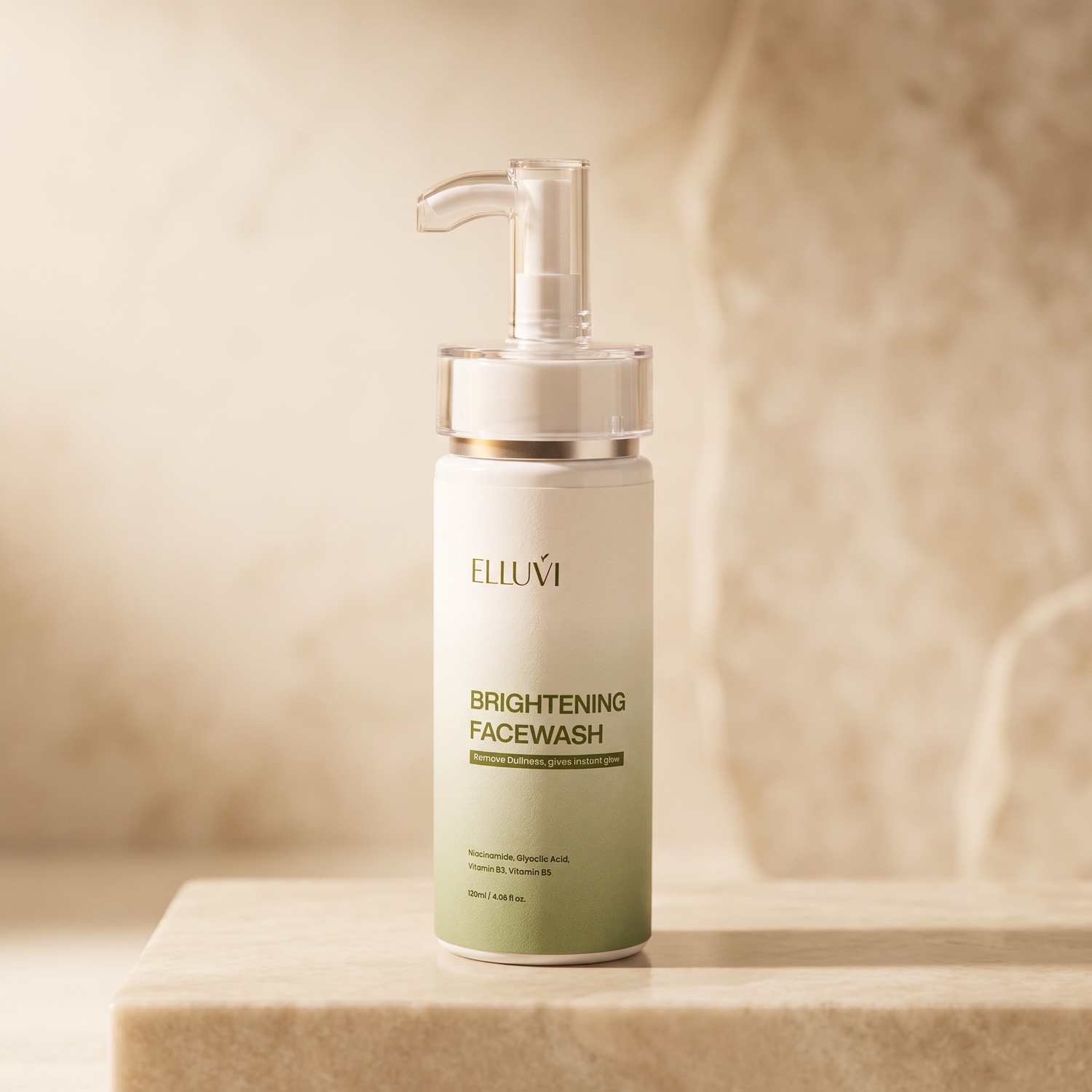
Elluvi's Brightening Face Wash pairs 5% glycolic acid with 5% niacinamide at Rs. 849 for 120 ml. It is deliberately a rinse-off product: in Pakistan's heat and sun a daily leave-on AHA is a fast route to a compromised barrier for a lot of people. If you already tolerate acids well and want more, a dedicated serum from a brand that states pH is the next step up.
Swipe the table sideways to see every column.
| Product | Format and stated strength | Price |
|---|---|---|
| Elluvi Brightening Face Wash | Wash, glycolic acid 5% stated, 120 ml. Under a minute of contact, which is the point and the limit | Rs. 849 |
| L'Oreal Paris Glycolic Bright serum | Leave-on serum, 30 ml. Percentage not stated | Rs. 1,799 |
| Glycolic 7% exfoliating toner | Leave-on toner, glycolic acid 7% stated. Sold as a combo | Rs. 2,430 |
Glycolic acid and pigmentation
It helps with surface pigmentation and post-blemish marks by speeding up cell turnover, but it does not stop pigment being produced. Pair it with vitamin C or niacinamide, which act on the pigment pathway itself.
Exfoliating harder does not fade a dark mark faster, and over-exfoliating inflamed skin usually makes pigmentation worse rather than better. This is the most common self-inflicted setback in the whole category.
What not to layer it with
Do not use glycolic acid on the same night as retinol when you are starting out, and do not stack it with a salicylic product. Alternate nights instead.
Both are effective and both disrupt the barrier. Used together before your skin has adapted, the result is stinging, flaking and a month of recovery that costs you more progress than the combination ever gained.
How long before it shows
Surface smoothness and glow usually improve within two to three weeks. Tone and marks take eight to twelve weeks of consistent use.
Apply a small amount to a discreet area of the jawline once daily for 2–3 days. Stop if persistent redness, itching or irritation occurs.
Sunscreen decides the outcome
Freshly exfoliated skin is more UV-sensitive. Using an AHA without daily SPF in Pakistan reliably produces more pigmentation than you started with.
Sunscreen is not currently sold by Elluvi. Use a broad-spectrum SPF 30 or higher from a trusted brand.