How to remove sun tan in Pakistan
A tan fades by itself. Skin darkened by sun replaces its surface over roughly four to six weeks, so the honest version of tan removal is speeding up something already happening — with vitamin C or a mild acid at night, and with daily sun protection that stops it being replaced faster than it clears. Nothing removes a tan in a day, and the home remedies most widely repeated here make it last longer.
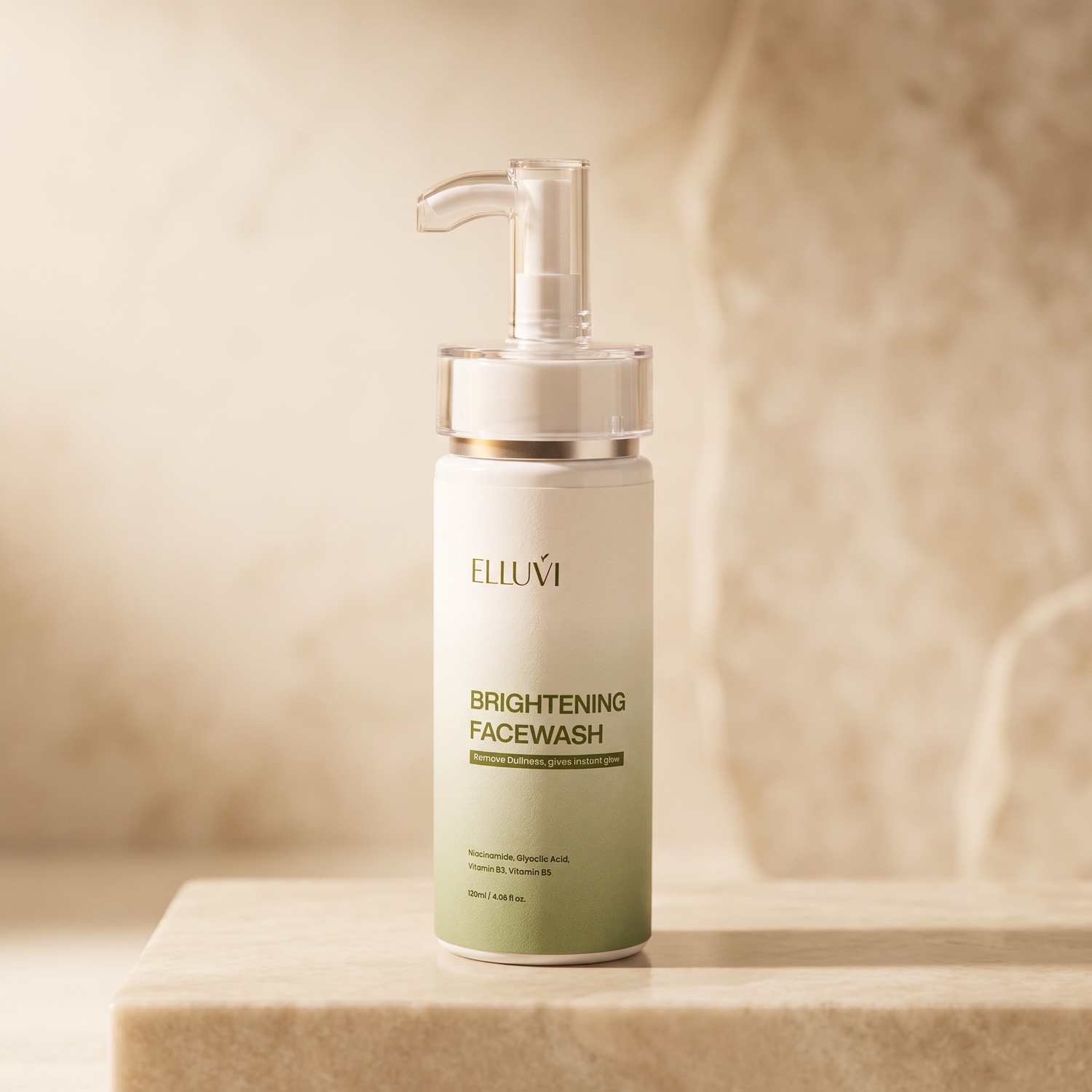
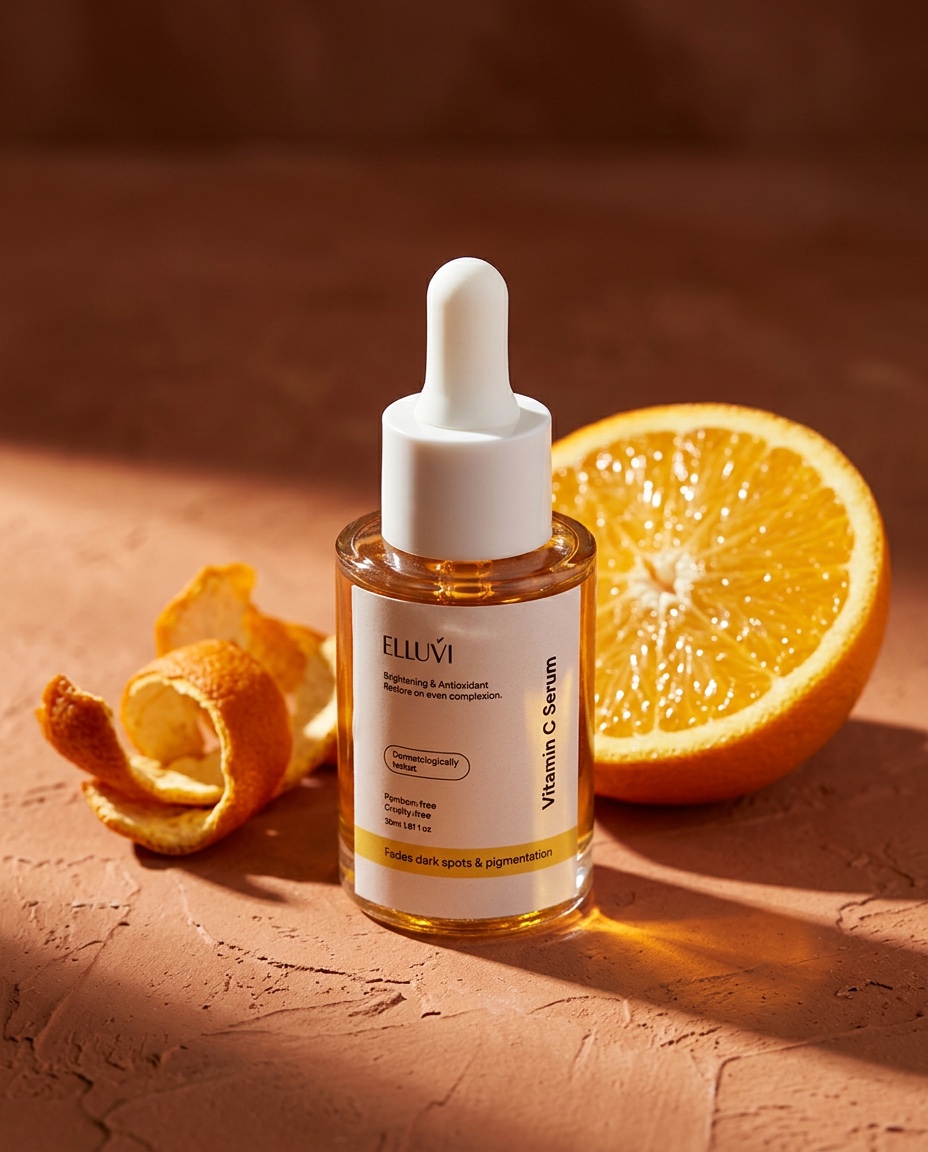
The thing that matters most for a tan is the one we do not sell: a broad-spectrum SPF 50, from any brand. What Elluvi makes that is relevant is a 10% vitamin C serum and a 5% glycolic face wash, which help the tan clear faster. Without the sunscreen they are working against something that puts it straight back.
Reviewed
See the matching concern routineWhat a tan actually is
Tanning is melanin produced on purpose, as a shield, after ultraviolet light has already damaged the skin. It is evidence of injury rather than a stain sitting on the surface, which is why scrubbing does not lift it and why bleaching it is treating the wrong thing.
It matters because it sets a realistic timeline. Surface skin cells turn over in about four to six weeks in most adults, slower with age. A tan on the face fades faster than one on the hands and forearms, which are thicker, exposed more often and usually protected less.
How long tan removal takes
Two to four weeks for a light tan on the face with consistent treatment and daily SPF. Four to eight weeks for hands, arms and neck. Longer if you are still getting sun each day, which in Pakistan most people are.
| Area | Light tan | Deep or repeated tan | Why |
|---|---|---|---|
| Face | 2–3 weeks | 4–6 weeks | Thinner skin, fastest turnover |
| Neck | 3–4 weeks | 6–8 weeks | Often missed by sunscreen |
| Hands | 4–6 weeks | 8–12 weeks | Thick skin, constant exposure |
| Forearms | 4–6 weeks | 8–12 weeks | Rarely protected on a commute |
What works
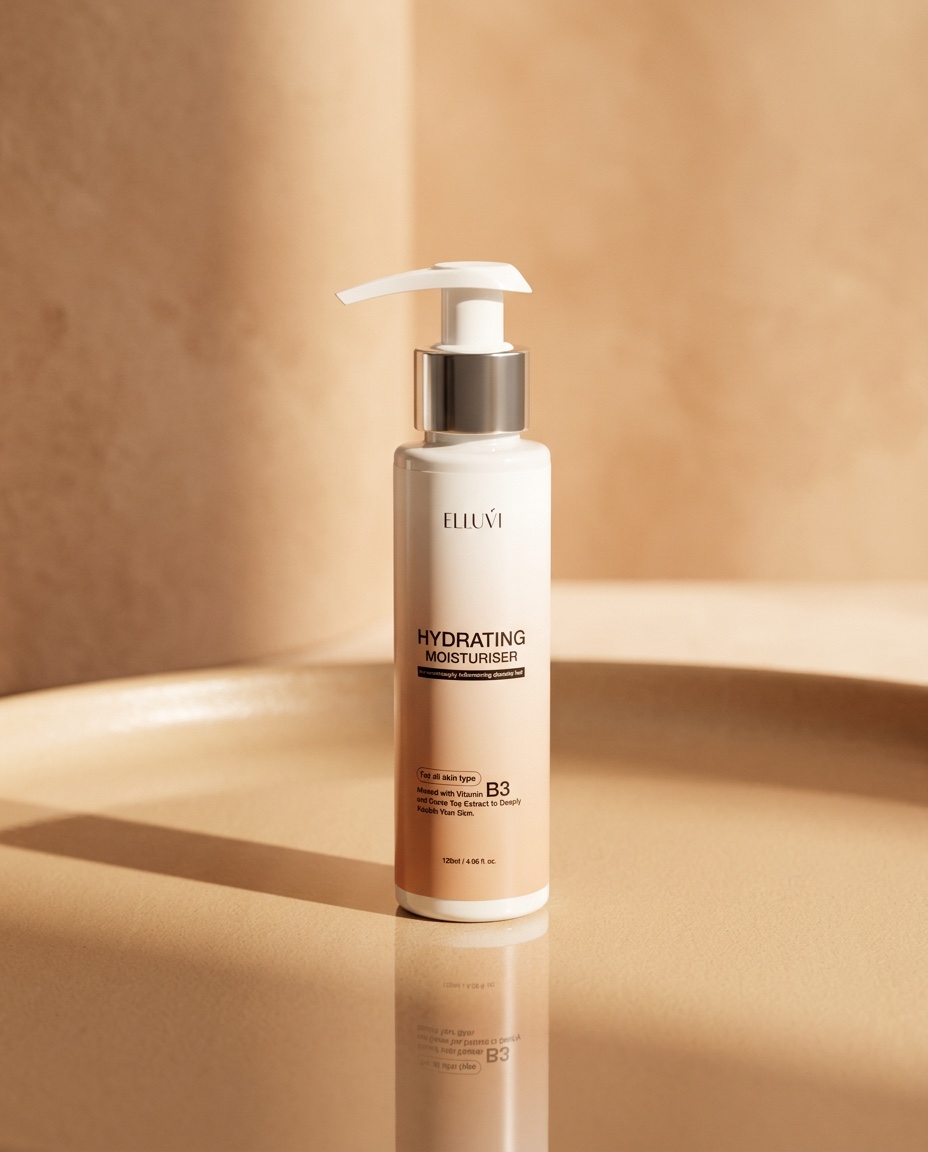
Vitamin C in the morning for antioxidant support and the appearance of tone, a mild acid at night to speed surface turnover, moisturiser to keep the barrier intact, and broad-spectrum SPF 50 every single morning. The sunscreen is not the final step — it is the one that decides whether the others accomplish anything.
Niacinamide and alpha arbutin help where the tan has left uneven patches rather than an even darkening. Retinol speeds turnover more than glycolic does, but it is a night-only active and it makes skin more sun-sensitive, which on a tan you are actively trying to clear is a trade-off to make deliberately rather than by accident.
What makes it worse
Lemon juice is the most repeated tan remedy in Pakistan and one of the worst: it is strongly acidic, it irritates, and the psoralens in citrus on sun-exposed skin can cause phytophotodermatitis — a genuine chemical burn that leaves darker marks than the tan you started with.
Also on the list: scrubbing with sugar or besan until the skin is red, bleaching creams, and the unlabelled mix creams sold for instant fairness, which typically combine a steroid, hydroquinone and a retinoid. Every one of those causes inflammation, and inflammation on tanned skin produces post-inflammatory hyperpigmentation — a flat brown mark that outlasts the tan by months.
Tan removal creams sold in Pakistan
There is no such thing as a cream that removes a tan directly. Products sold as tan removal either exfoliate the surface faster, or suppress new melanin, or both. Judge them on stated percentages of actives with evidence — vitamin C, niacinamide, alpha arbutin, glycolic or lactic acid — and treat any promise of a result in days as a warning.
Elluvi's Vitamin C Serum states 10% ascorbic acid, and the Brightening Face Wash states 5% glycolic acid with 5% niacinamide. We name percentages because most of this category does not, and an unstated percentage cannot be compared with anything. What we do not make is a sunscreen, and for a tan that is the more important purchase.
If the tan is not fading at all
Darkening that does not clear in eight weeks with protection is probably not a tan. Symmetrical patches on both cheeks are more likely melasma, which is hormonal and recurring; scattered fixed spots are sun damage rather than tanning; a darkened patch where something healed is a post-inflammatory mark.
Those need different treatment and different expectations, and the guides linked below cover each. Getting the identification right first is worth more than any product decision that follows it.