
Retinol prices in Pakistan, with cost per night
Locally made retinol sits around Rs. 500 to Rs. 1,500. Imported Indian brands run Rs. 2,500 to Rs. 4,000. Western imports run Rs. 5,000 to Rs. 13,000. Converted to cost per night, the gap is between roughly Rs. 4 and roughly Rs. 65.
Cost per night below assumes three nights a week, which is where most people settle with retinol, and normal use of each format: two to three drops of a serum, a pea-sized amount of a cream. Elluvi prices are our own fixed prices; the other prices are typical Pakistan retail and move with the exchange rate and the seller, so read those as bands.
Swipe the table sideways to see every column.
| Product | Format and strength | Size | Typical price | Cost per night |
|---|---|---|---|---|
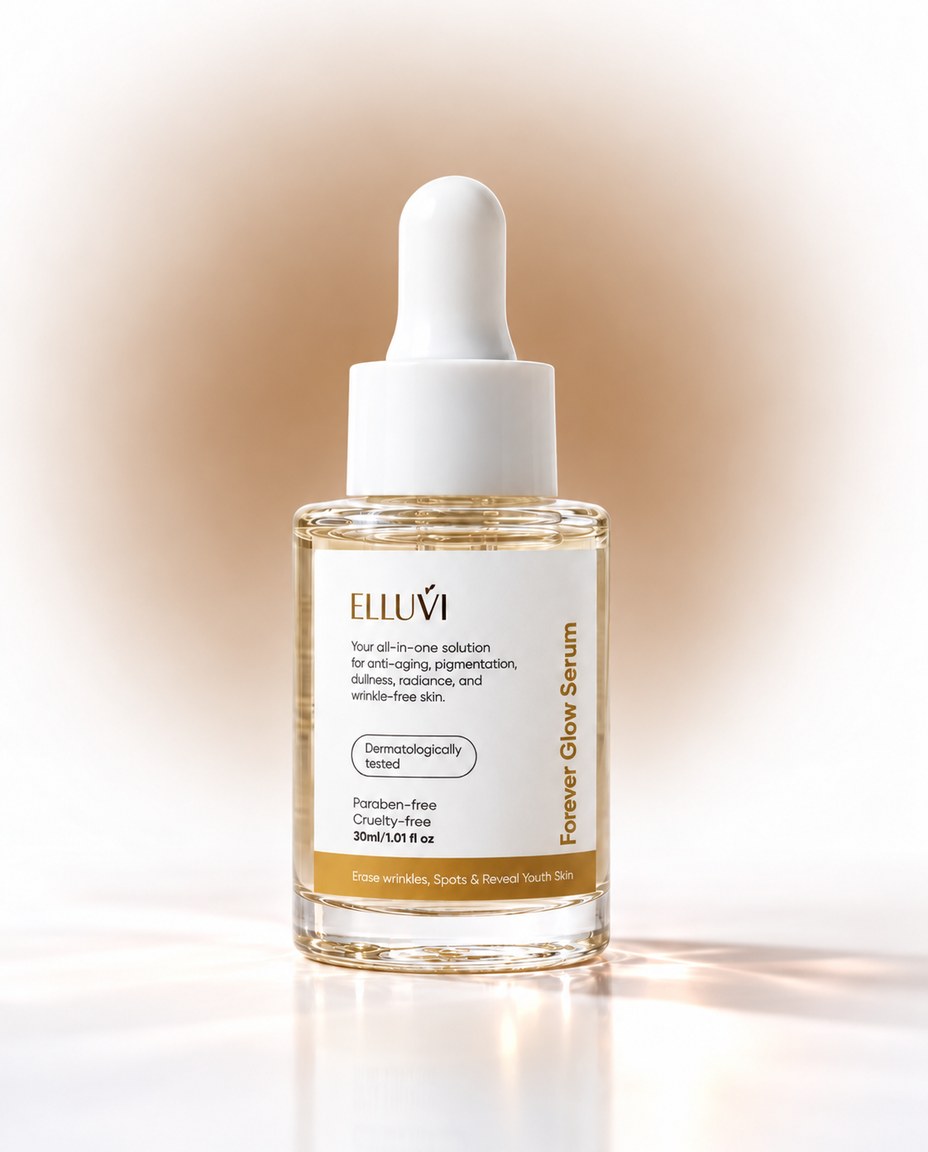
| Elluvi Age Defying Serum | Serum, 0.3% retinol stated, with niacinamide 5%, alpha arbutin 2% and peptides | 30 ml | Rs. 1,299 | About Rs. 6–7 |
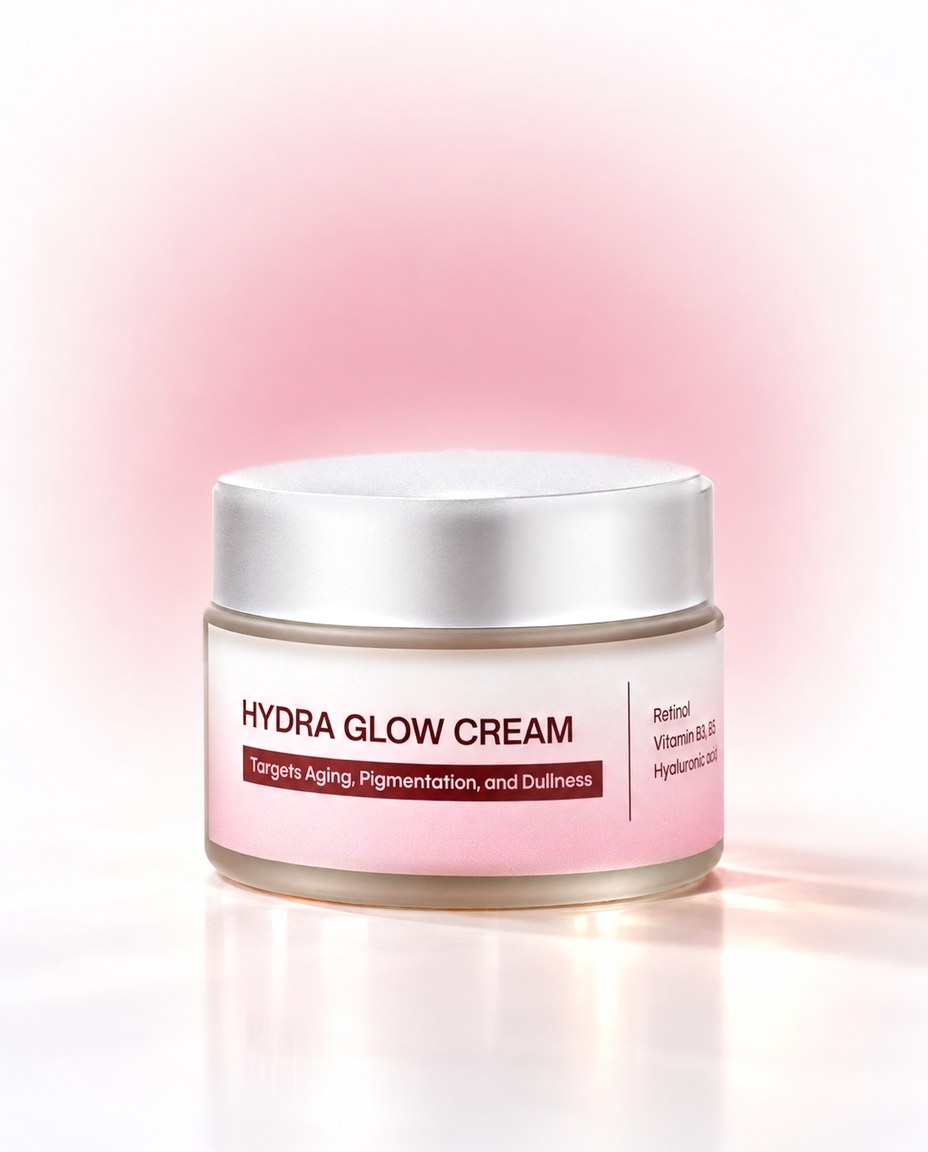
| Elluvi Hydra Glow Cream | Night cream, 0.3% retinol stated, with niacinamide | 50 ml | Rs. 1,449 | About Rs. 9–10 |
| Local and marketplace retinol serums | Serum, percentage usually not stated | 20–30 ml | Rs. 500–1,200 | Rs. 4–6 |
| Minimalist Retinol 0.3% / 0.6% | Serum, stated, squalane base | 30 ml | Rs. 2,500–4,000 imported | Rs. 13–20 |
| The Ordinary Retinol in Squalane | Serum, stated at 0.2%, 0.5% or 1% | 30 ml | Rs. 3,000–5,500 imported | Rs. 15–28 |
| Olay Retinol24 Night Cream | Night cream, retinol plus niacinamide, percentage not stated | 50 ml | Rs. 4,500–8,000 imported | Rs. 27–48 |
| CeraVe Resurfacing Retinol Serum | Serum, encapsulated retinol, percentage not stated | 30 ml | Rs. 5,000–8,000 imported | Rs. 25–40 |
| La Roche-Posay Retinol B3 Serum | Serum, 0.3% retinol stated | 30 ml | Rs. 8,000–13,000 imported | Rs. 40–65 |
Is retinol available in Pakistan?
Yes. Cosmetic retinol is sold openly here — locally made serums and creams, imported lines through pharmacies and authorised stockists, and grey-market stock on the marketplaces. It needs no prescription. Prescription retinoids such as tretinoin are a separate category and a doctor's decision, not a shelf purchase.
What is genuinely hard to buy in Pakistan is a wide range of stated strengths. Locally you will mostly find 0.3%, sometimes 0.5%, and above that you are into imports. So the practical answer to "is retinol available in Pakistan" is that the ingredient is easy to find and the label is not: plenty of stock, far less disclosure.
Cost per night is the only comparison that works here
Retinol is used two to three nights a week, not daily, and the two formats hold a different number of applications. Two to three drops is about 0.15 ml, so a 30 ml serum holds roughly 200 applications. A pea-sized amount of cream is about 0.3 ml, so a 50 ml cream holds roughly 150 to 170. At two to three nights a week, both last well past six months.
That is why the sticker price misleads in both directions. It is also why a 15 ml imported bottle at Rs. 3,000 is not a cheap way into retinol — it is about Rs. 30 a night, several times the cost per night of a 30 ml at Rs. 1,299, for the same stated strength. Convert to cost per millilitre or cost per night before deciding anything is affordable.
Retinol cream price in Pakistan
Locally made retinol night creams run about Rs. 1,200 to Rs. 2,000 for 50 ml. Imported retinol creams run Rs. 4,500 to Rs. 9,000. Elluvi Hydra Glow Cream is Rs. 1,449 for 50 ml at a stated 0.3% retinol with niacinamide and alpha arbutin.
Creams look worse value than serums on the shelf, and in use the gap is small: about Rs. 9 to 10 a night for the cream against Rs. 6 to 7 for a 30 ml serum. If your skin runs dry, or a retinol serum has been too drying before, the cream is the more comfortable choice for a few rupees more a night.
What Rs. 500 buys, and what it does not
At the bottom of the market the problem is almost never dilution — retinol is a cheap raw material. The problem is that the percentage is not stated, so you cannot tell a genuinely dosed 0.3% from a trace, and neither can anyone else.
Because retinol is inexpensive to buy in bulk, a properly dosed serum is affordable to make at a local price. What Rs. 500 usually leaves out is everything that keeps retinol working: opaque or airless packaging, stability testing, a batch date, and a stated number on the pack. If a serum states a percentage and shows a full INCI list, a low price is not a reason to reject it. If it states neither, the price is irrelevant because there is nothing to price.
Where the imported price goes
Import duty, sales tax, freight, distributor margin and the exchange rate, which together roughly double to triple the original price before it reaches a shelf in Pakistan. The formula does not change on the way here.
There is a real difference at the top of the market, but it is smaller than the price gap suggests: better packaging, encapsulation that releases retinol more slowly, and supporting ingredients that reduce irritation. None of that is five to ten times the product. If you are paying Rs. 10,000 for a 0.3% serum, most of the money is logistics.
Heat and light cost you money too
Retinol degrades with heat, light and air. A clear bottle stored on a bathroom shelf through a Pakistani summer loses potency, and a grey-market import may have already spent months in unairconditioned storage in two countries before you buy it.
Retinol is more forgiving than vitamin C here, but the failure looks the same from outside: the product applies normally and does nothing. This is where an imported serum at Rs. 8,000 can be genuinely worse value than a local one at Rs. 1,299 — not a worse formula, but an unknown history. Buy from the brand or an authorised stockist, and keep it in a closed cupboard rather than the bathroom.
Does a higher percentage justify a higher price?
No. 0.1% to 0.3% is where most people should be, and a tolerated 0.3% used for six months beats a 1% used twice and abandoned. Paying more for a bigger number usually buys irritation, not results.
The exception is a step up after you already tolerate 0.3% comfortably, and even then 0.5% is the sensible next stop rather than 1%. Since we do not sell a 0.5% serum, the imported stated-percentage lines in the table above are the honest option for that case.
What Elluvi charges
Age Defying Serum, Rs. 1,299 for 30 ml: 0.3% retinol stated, with niacinamide 5%, alpha arbutin 2%, a Matrixyl 3000 peptide complex and 0.5% hyaluronic acid. Hydra Glow Cream, Rs. 1,449 for 50 ml: 0.3% retinol stated, with niacinamide and alpha arbutin. Both ship from Lahore.
Use one or the other at night, not both — they are both retinol products. The serum is for experienced retinol users with normal or combination skin who want to choose their own moisturiser; the cream suits dry skin, winter, first-time retinol users, and anyone who wants a single night step. The small amount of glycolic acid in the serum is formulated with its retinol; the rule about acids is not to add a separate exfoliating acid, including the face wash, on the same night. Cash on Delivery is available across Pakistan.
What a realistic retinol budget covers
Around Rs. 1,300 to Rs. 1,450: one stated-strength retinol, which at two to three nights a week lasts well over six months in either format. Around Rs. 2,700: that plus a moisturiser, which is the whole night routine. Under Rs. 700: buy sunscreen instead.
That last line is not a throwaway. Retinol without daily SPF makes skin more sun-sensitive while you work on the same damage sunlight is causing, so if the budget covers only one of the two, sunscreen wins. Apply a small amount to a discreet area of the jawline once daily for 2–3 days. Stop if persistent redness, itching or irritation occurs. Retinol is not recommended during pregnancy or breastfeeding.