
Three jobs from one ingredient
Azelaic acid is antibacterial against Cutibacterium acnes, anti-inflammatory enough to reduce the look of redness, and a tyrosinase inhibitor that slows pigment production. Very few single ingredients cover acne, redness and marks together.
That combination is why dermatologists reach for it in cases where acne and post-inflammatory pigmentation arrive together — which, on deeper skin tones, is most cases. Clearing the spot and preventing the brown mark it leaves are usually two separate battles. Azelaic acid fights both.
Cosmetic 10% versus prescription 20%
10% azelaic acid is the standard over-the-counter cosmetic strength and does meaningful work. 15% and 20% formulations are prescription-grade and are what the clinical trials for acne and rosacea were run on. In Pakistan the pricing runs backwards: prescription 20% starts at Rs. 808, while cosmetic 10% runs from Rs. 1,199 to Rs. 4,500.
A 10% product is a reasonable place to start and does not need supervision. If ten to twelve weeks of consistent use produces nothing, that is the point to see a dermatologist about the prescription strength rather than to buy a second 10% product from a different brand. What the Pakistani shelf does to that advice is strange enough to be worth stating plainly: prescription 20% is the cheapest azelaic acid you can buy here. Skinoren, the Bayer original, is Rs. 808. Every cosmetic 10% serum in the table costs more, and the imported ones cost five times more. Two cautions before that reads as a shopping tip. A 10 g cream is not a 30 ml serum, so the per-use gap is narrower than the shelf price suggests. And prescription means a pharmacist verifies a prescription before dispensing, which is the correct order — 20% is the strength the acne and rosacea trials were run on, and it is also the strength most likely to sting on skin that was not ready for it.
Swipe the table sideways to see every column.
| Product | Stated strength and size | Price |
|---|---|---|
| ChiltanPure Azelaic Acid Serum | 30 ml. No percentage stated anywhere on the listing, so there is no way to know whether this is 10% or a fraction of it | Rs. 1,199 |
| Oneskin Pigment Corrector | Azelaic acid 1% with salicylic acid 0.2%, both stated. 30 ml. Honest labelling, but 1% is a tenth of cosmetic strength | Rs. 1,500 |
| SkinFactor 2% Salicylic Acid Serum | Sold as a salicylic serum. Azelaic acid is named in the formula without a percentage. Size not stated | Rs. 1,640 |
| The Ordinary Azelaic Acid Suspension 10% | Azelaic acid 10%, 30 ml. The reference cosmetic formula. Imported, and out of stock at the seller checked | Rs. 4,440 imported |
| Nineless A-Control 10% Azelaic Acid Serum | Azelaic acid 10%, 30 ml, plus niacinamide, panthenol and snail mucin with no percentages. Korean, imported | Rs. 4,500 imported |
| Skinoren, Bayer | Azelaic acid 20%, 10 g cream. Prescription, dispensed after a pharmacist verifies one | Rs. 808 prescription |
| Azeskin, Whiz Pharma | Azelaic acid 20%. Pack size not stated. Prescription, dispensed after a pharmacist verifies one | Rs. 1,095 prescription |
Despite the name, it is not an exfoliating acid
Azelaic acid is a dicarboxylic acid and does not work by exfoliation the way glycolic or salicylic acid do. You cannot compare its percentage to theirs, and it does not carry the same over-exfoliation risk.
This confuses a lot of people into treating it as a peel and using it cautiously on alternate nights forever. It is designed for daily, often twice-daily, use. The limiting factor is the tingling some formulas cause in the first fortnight, not barrier damage.
Who it suits best
Acne-prone skin that also marks easily. Persistent facial redness. Post-inflammatory hyperpigmentation on medium to deep skin tones. Anyone who is pregnant or breastfeeding and has had to stop retinol and cannot use most acne treatments.
That last group is underserved in this market. Pregnancy takes retinoids off the table entirely, and salicylic acid is usually limited to rinse-off. Azelaic acid is the ingredient most commonly considered acceptable — although the decision belongs with your doctor, not with a skincare brand.
The texture problem
Azelaic acid does not dissolve easily, so formulas are often thick, slightly gritty or leave a film. In Pakistani heat that texture is the main reason people stop using it.
It is worth trying a formula at night first, and applying it to properly dry skin. Suspension-style formulas feel heaviest; gel and emulsion textures sit better under humidity. If a product pills under sunscreen, move it to the evening routine rather than abandoning the ingredient.
Tingling in the first two weeks is normal
A mild burning or prickling sensation for the first ten to fifteen minutes after application is common and usually settles within two weeks. Persistent redness, swelling or itching is not, and means stop.
Apply a small amount to a discreet area of the jawline once daily for 2–3 days. Stop if persistent redness, itching or irritation occurs.
What Elluvi offers instead
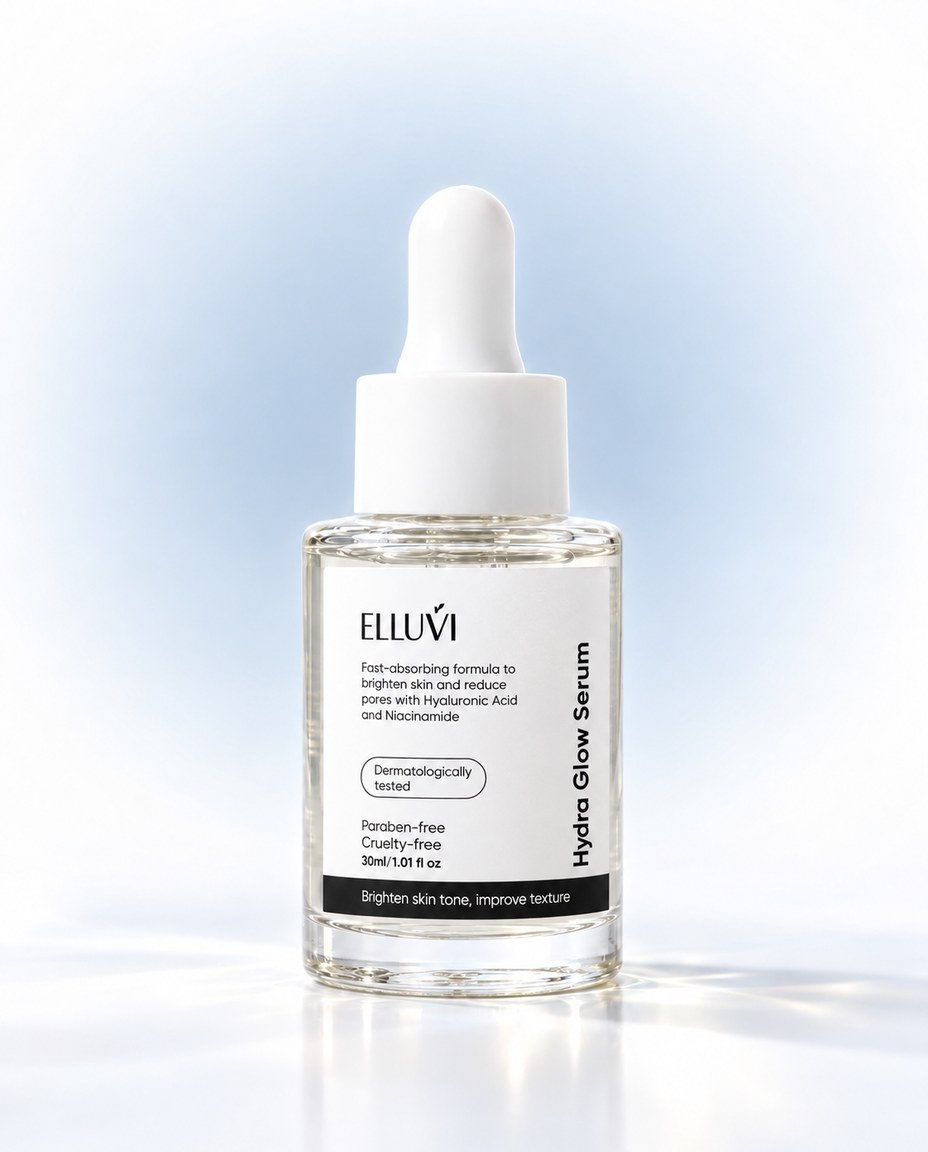
Elluvi does not make an azelaic acid product. For acne with marks, the closest honest option is 10% niacinamide with 1% zinc PCA in Hydra Glow Serum at Rs. 1,149 for 30 ml, which addresses oil, the look of congestion and pigment transfer — a narrower job, done at a stated dose.
Niacinamide and azelaic acid overlap on marks and redness but not on the antibacterial side. If active, inflamed acne is the main problem rather than what it leaves behind, azelaic acid from a brand that makes one, or a dermatologist visit, is the better route. We would rather say that than sell you a serum for the wrong problem.
How long before it works
Redness often improves within four weeks. Acne takes eight to twelve weeks. Pigmentation takes twelve weeks or more, and only alongside daily sunscreen.
Sunscreen is not currently sold by Elluvi. Use a broad-spectrum SPF 50 from a trusted brand every morning.