

The morning routine, in order
Rinse with water or a gentle non-acid wash, apply a niacinamide serum on damp skin, seal with a light moisturiser, then sunscreen. Four steps, under three minutes, no toner and no astringent.
Order matters because each layer has to reach skin, not sit on top of the previous one. Thinnest first: water-based serum, then emulsion, then sunscreen last because it needs an unbroken film on the surface to work at its stated SPF.
Swipe the table sideways to see every column.
| Step | Morning | Night | How often |
|---|---|---|---|
| Cleanse | Water rinse, or a gentle non-acid wash | The main cleanse, and this one is not optional. An acid wash goes here, but not on retinol nights | Acid wash once daily, in the evening |
| Treat | Niacinamide 10% with zinc | Niacinamide, or retinol on retinol nights | Daily, retinol two to three nights |
| Moisturise | Light gel or lotion | The same, or slightly richer | Twice daily, including oily skin |
| Protect | Broad-spectrum SPF 50, fluid or gel | Nothing | Every morning, reapplied if outdoors |
| Exfoliate | No | Salicylic acid, never on a retinol night | Two nights a week at most |
The night routine, in order
Cleanse, treat, seal. If you are using an active — glycolic in the wash, or retinol two to three nights a week, on different nights — the night is where it goes, because these ingredients raise sun sensitivity and because skin repairs overnight.
Nothing needs to be added to a night routine to make it work harder. A common mistake on oily skin is stacking a scrub, a toner, an acid and a clay mask into one evening, which strips the barrier and produces more oil by the following afternoon.
Why stripping your skin makes it oilier
A cleanser that leaves skin tight has removed barrier lipids as well as surface oil. Skin responds by producing more sebum, which is why the shine is back by midday and worse than before.
This is the single most common loop in Pakistani oily-skin routines, and the reason foaming face washes marketed on a squeaky finish sell so well here. If your skin feels tight for more than a minute after washing, the cleanser is too harsh regardless of what the label promises.
The one ingredient that reduces oil production
Niacinamide at 5% or more. It has real evidence behind reducing sebum output and the look of enlarged pores. Zinc PCA supports it. Nothing else in a normal routine changes how much oil your skin makes.
Everything else in an oily-skin routine manages oil after it appears — blotting, mattifying powders, clay. Niacinamide works on the production side, which is why it does most of its work in a leave-on step.
Yes, oily skin needs a moisturiser
Skipping moisturiser is the fastest way to make oily skin worse. What changes for oily skin is the format — a light lotion or gel rather than a rich cream — not whether the step happens.
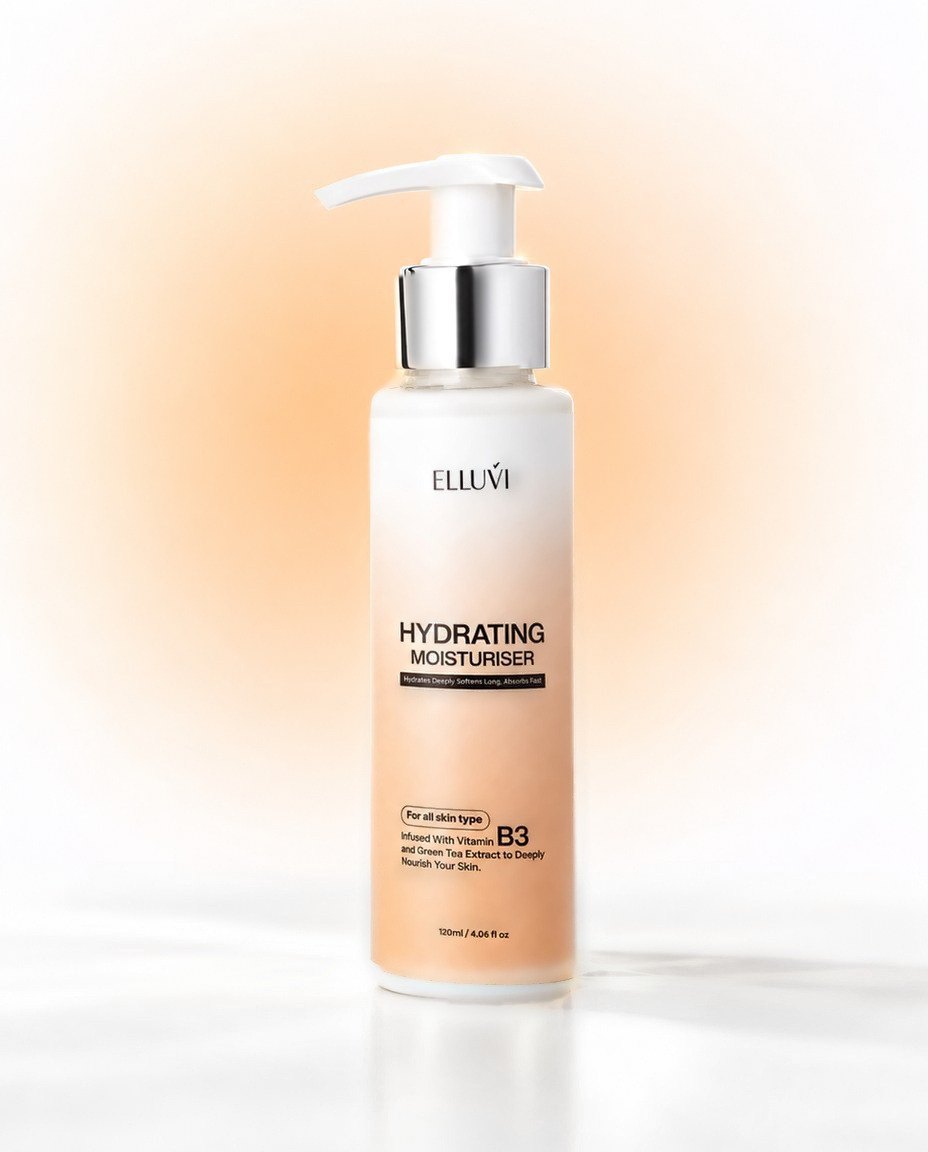
In practice most people who say moisturiser breaks them out were using a heavy occlusive cream built for a dry winter. A 120 ml lightweight moisturiser with niacinamide and hyaluronic acid sits differently on the skin at 40 degrees than a shea-butter-forward cream does.
Sunscreen is not optional, even on oily skin
UV exposure worsens post-acne marks and pigmentation, which is what most oily-skin routines are actually trying to fix. A gel or fluid broad-spectrum SPF 50, applied every morning, protects the work the rest of the routine is doing.
Sunscreen is not currently sold by Elluvi. Use a broad-spectrum SPF 50 from a trusted brand every morning.
What this routine costs
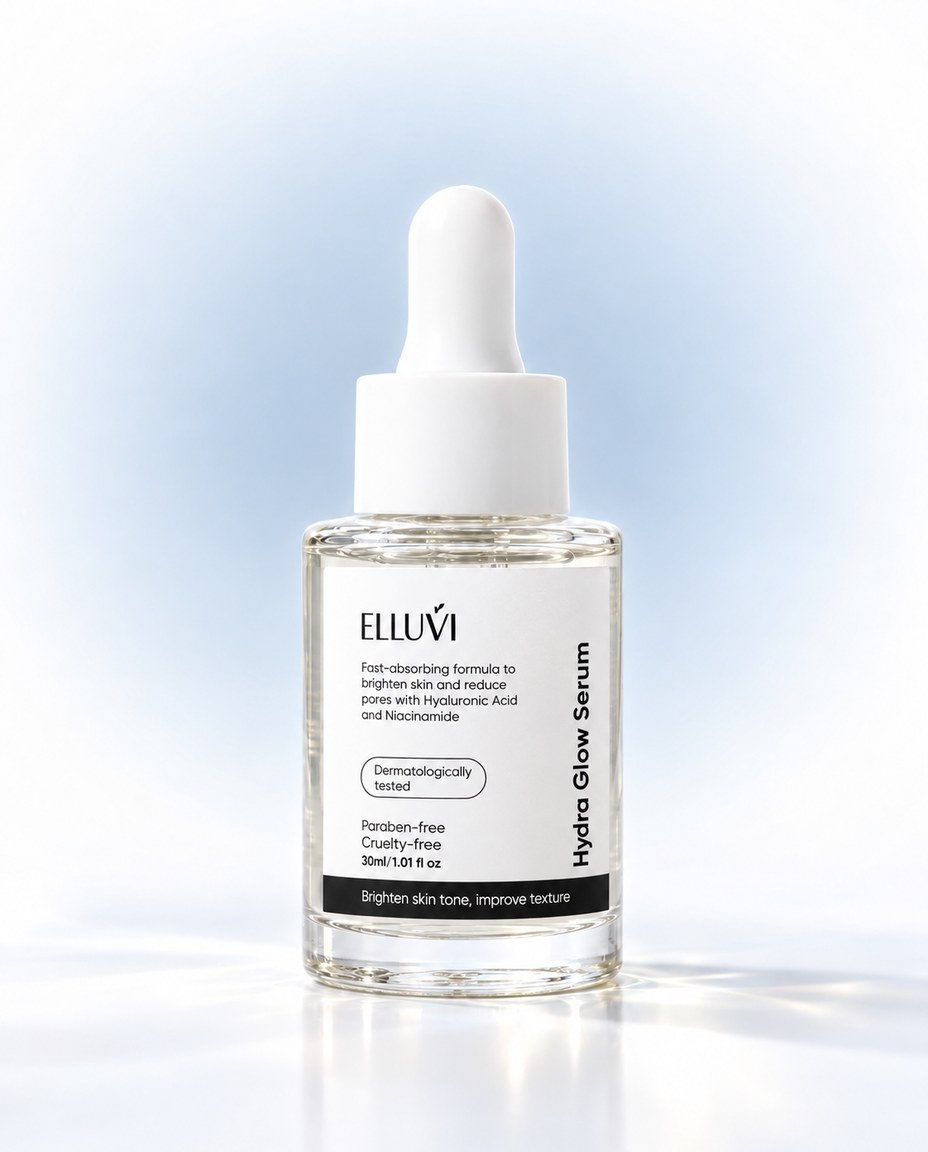
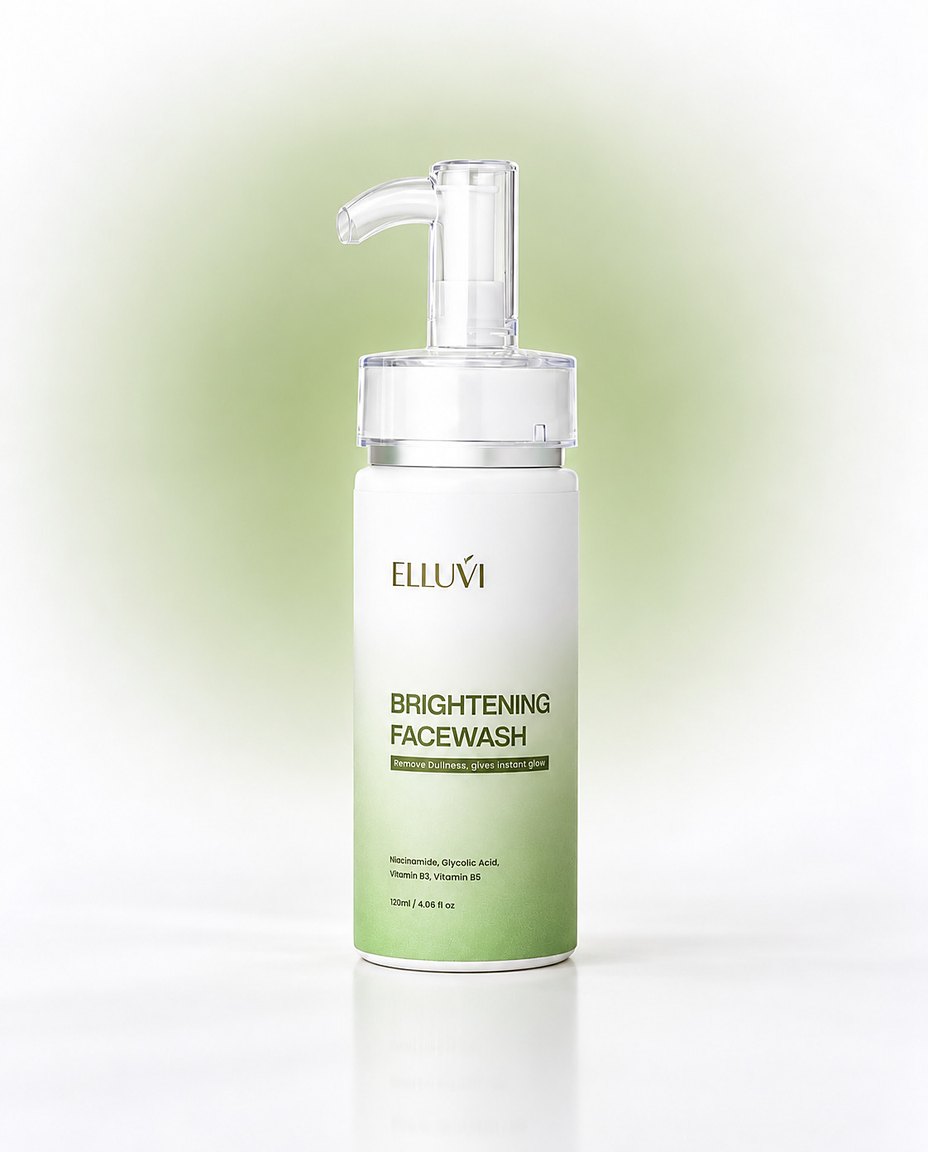
Brightening Face Wash Rs. 849 for 120 ml, Hydra Glow Serum Rs. 1,149 for 30 ml with 10% niacinamide and 1% zinc PCA, and Hydrating Moisturiser Rs. 1,249 for 120 ml. Around Rs. 3,247 for about three months of a complete routine, plus a sunscreen from any trusted brand.
If the budget only stretches to two products, buy the cleanser and the moisturiser. The serum is the step that accelerates results, but a gentle wash plus a light moisturiser used twice daily already breaks the strip-and-rebound loop, and that is where most of the shine comes from.
How long before it works
Shine and comfort usually change within two weeks. Pore appearance and post-acne marks take eight to twelve weeks. Judge the routine at week four, not week one.
Apply a small amount to a discreet area of the jawline once daily for 2–3 days. Stop if persistent redness, itching or irritation occurs.
Shop what this guide covers
FAQs
Three steps, one active doing the work in each. The Brightening Face Wash is 3% glycolic acid with 3% niacinamide for oil, sweat and the day's pollution. Hydra Glow Serum is 10% niacinamide with 1% zinc PCA, which is the pairing with real evidence behind reducing sebum and the look of pores. The Hydrating Moisturiser is a 120 ml light cream-gel, because skipping moisturizer is one of the reasons oily skin stays oily.