Best cleanser in Pakistan: how to choose by type and skin
Cleanser is a broader category than face wash. It covers gel and foaming washes, but also cream, oil, balm and micellar formulas that suit dry and sensitive skin better. The right one depends on your skin type and on what you are removing: sunscreen and pollution at night need more than water and a gel can manage.
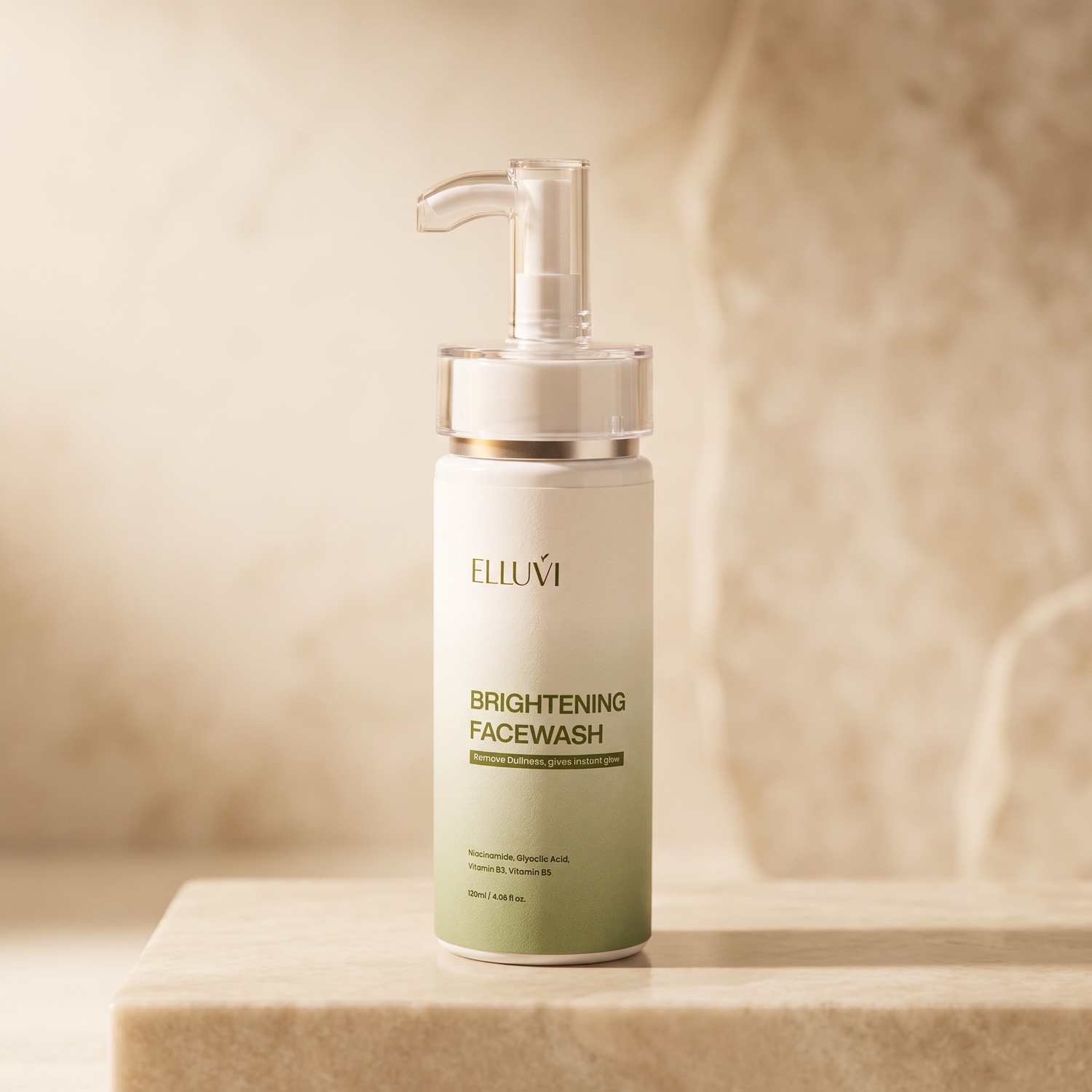
Elluvi has one cleanser, so this page cannot offer a range. It is a glycolic acid 5% gel wash at Rs. 849 for 120 ml, which is one of the cleanser types described below rather than all of them.
Reviewed

Cleanser types, and who each suits
Gel and foaming cleansers suit oily and combination skin. Cream and milk cleansers suit dry and sensitive skin. Oil and balm cleansers remove sunscreen and makeup. Micellar water is a light option for mornings or travel.
Most people only ever try the gel category, because that is what fills shelves here, then conclude that cleansers make their skin tight. Often the type was wrong rather than the product.
Swipe the table sideways to see every column.
| Cleanser | Format and stated actives | Price |
|---|---|---|
| B&B Dermaceuticals salicylic wash | Gel, 250 ml. Salicylic acid named, percentage not stated. Rs. 3.0 per ml, the cheapest per use here | Rs. 749 |
| Elluvi Brightening Face Wash | Gel, 120 ml. Glycolic acid 5% and niacinamide stated. Works on dullness and texture rather than clogged pores. Rs. 7.1 per ml | Rs. 849 |
| Imported foaming cleansers | Usually 236 to 473 ml. The same CeraVe foaming cleanser was Rs. 3,550 at one Pakistani seller and Rs. 7,050 at another on the same day | Rs. 3,550 to Rs. 7,050 |
| Local cleansers generally | Almost none state a percentage for any active, and most state no size, so per-millilitre cost often cannot be worked out | Rs. 349 to Rs. 1,800 |
Is double cleansing worth it in Pakistan?
At night, often yes. An oil or micellar cleanser first to break down sunscreen, sweat and pollution, then a normal cleanser to wash the skin underneath. In the morning it is unnecessary.
Sunscreen is the deciding factor. If you wear SPF daily, and in this UV you should, a single gel wash frequently leaves a film behind. That residue is a common and rarely diagnosed cause of congestion along the jaw and hairline.
Cleanser or face wash: does the distinction matter?
In practice the words overlap. Face wash usually means a foaming formula that rinses with water. Cleanser is the wider category and includes non-foaming options. If your skin feels tight after washing, moving from a face wash to a cream cleanser often fixes it.
Nothing about the label tells you how gentle a product is. A foaming cleanser can be mild and a cream cleanser can be poorly formulated. Skin type plus how your face feels ten minutes after washing beats any category name.
What to look for on the label
Mild surfactants rather than sulfates high in the list, a stated pH near skin's own if the brand gives one, humectants like glycerin, and a full INCI list. Avoid denatured alcohol near the top and rough physical scrub particles.
Actives in a cleanser have seconds of contact time, so a stated percentage matters less here than it does in a serum. What matters more is the base: a well-formulated cleanser without actives beats a harsh one with them.
Cleanser prices in Pakistan
Basic cleansers run around Rs. 300 to Rs. 700. Locally formulated options with stated actives sit at Rs. 800 to Rs. 1,500. Imported brands go past Rs. 2,000, mostly on import cost.
Compare millilitres, not sticker price. A 120 ml cleanser used once daily lasts roughly three months, so Rs. 849 works out under Rs. 10 a day. Elluvi Brightening Face Wash is Rs. 849 for 120 ml with 5% glycolic acid and 5% niacinamide.
Hard water changes how cleansers feel
Much of Pakistan's tap water is hard, and the calcium and magnesium in it react with surfactants to leave a residue. The same cleanser can feel comfortable in one city and squeaky in another.
Rinse thoroughly with lukewarm water, use your hands rather than a cloth, and keep the wash itself to about 30 seconds. Tightness after rinsing is residue plus a stripped barrier, not cleanliness.
Building a routine around it
Cleanse, treat with a serum on damp skin, moisturise, and add SPF in the morning. The cleanser is a supporting step, so spend on the leave-on products if the budget is tight.
The exception is if your current cleanser is actively irritating you. Nothing else in a routine works on a barrier that is being stripped twice a day, which makes replacing a harsh cleanser the highest-value change available.
Choosing a cleanser for oily skin
A gel or low-foam cleanser that leaves skin comfortable rather than squeaky, ideally with niacinamide or a measured acid. The instinct to reach for the strongest available cleanser is what keeps oily skin oily.
A cleanser that strips the barrier triggers more sebum production to compensate, so the shine returns worse by afternoon. Twice daily is the ceiling, plain water rinses in between are fine, and the ingredient that reduces oil production — niacinamide at 5% or above — belongs in a leave-on step rather than something rinsed off in thirty seconds.
Choosing a cleanser for dry and sensitive skin
A cream or milk cleanser with a mild surfactant, no added fragrance and no menthol. Use it once daily in the evening and rinse with lukewarm water in the morning if skin feels tight.
Dry skin is short of the barrier lipids a strong cleanser removes, so this is the skin type where cleanser choice matters most. If skin feels tight sixty seconds after towelling off, that is the diagnostic — the product is removing more than it should regardless of what the label promises.
Common mistakes
Hot water, scrubbing, cleansing three times a day, skipping moisturiser afterwards, and switching products every fortnight before anything has had time to work.
Give a new cleanser four weeks unless it irritates you. Irritation is immediate feedback and worth acting on straight away. Everything else takes about one skin turnover cycle to show.