Hyperpigmentation in Pakistan: the three kinds, and what each one answers to
Hyperpigmentation is any patch of skin darker than the skin around it, and the word covers three problems that behave nothing alike. Post-inflammatory marks left by a spot fade on their own and respond well to topicals. Melasma is hormonal, recurs, and needs a plan rather than a product. Sun spots accumulate and only stop accumulating when the sun stops reaching them. Identifying which one you are looking at is the entire decision.
Reviewed
See the matching concern routineThe three kinds, and how to tell them apart
Post-inflammatory hyperpigmentation sits exactly where a spot or an injury was, is flat, and fades over months. Melasma is symmetrical patching across the cheeks, forehead and upper lip, darkens with heat as well as light, and returns. Sun-induced pigmentation is scattered, asymmetric, and concentrated where light lands — the forehead, the nose, the right forearm if you drive.
Pakistani skin, typically Fitzpatrick types IV and V, produces more pigment in response to any insult, which is why post-inflammatory marks here last months rather than weeks and why aggressive treatment backfires so reliably. The mistake this page exists to prevent is treating melasma with the approach that works on marks: more actives, faster, stronger. Melasma inflames, and inflammation is what darkens it.
| Post-inflammatory | Melasma | Sun spots | |
|---|---|---|---|
| Where | Exactly where a spot was | Symmetrical patches | Scattered, light-exposed |
| Trigger | Inflammation, picking | Hormones, heat, light | Cumulative UV |
| Fades alone | Yes, over 3–12 months | No | No |
| Recurs | Only with new spots | Commonly | With more sun |
| Topicals help | Well | Partly, slowly | Well |
Post-inflammatory hyperpigmentation is the one that clears
PIH is excess melanin left behind after inflammation settles. It is flat, not a scar, and it resolves on its own — topicals shorten the timeline rather than create the result. Anything that keeps causing inflammation, including picking and over-exfoliating, resets the clock.
If you can feel a difference in texture — a dent, a raised ridge — you are looking at a scar, not a mark, and no serum changes that. The test is light: run a fingertip over it, and look at it under side lighting rather than straight on. Scars need a clinic. Marks need time, sun protection and one or two actives used consistently.
What each active actually does
Vitamin C and niacinamide work on pigment that is already there and on the transfer of new pigment. Alpha arbutin and azelaic acid interrupt pigment production. Retinoids speed up turnover so marked cells are shed sooner. Sunscreen stops new pigment being made, and without it the rest is a treadmill.
| Active | What it does | Where Elluvi puts it |
|---|---|---|
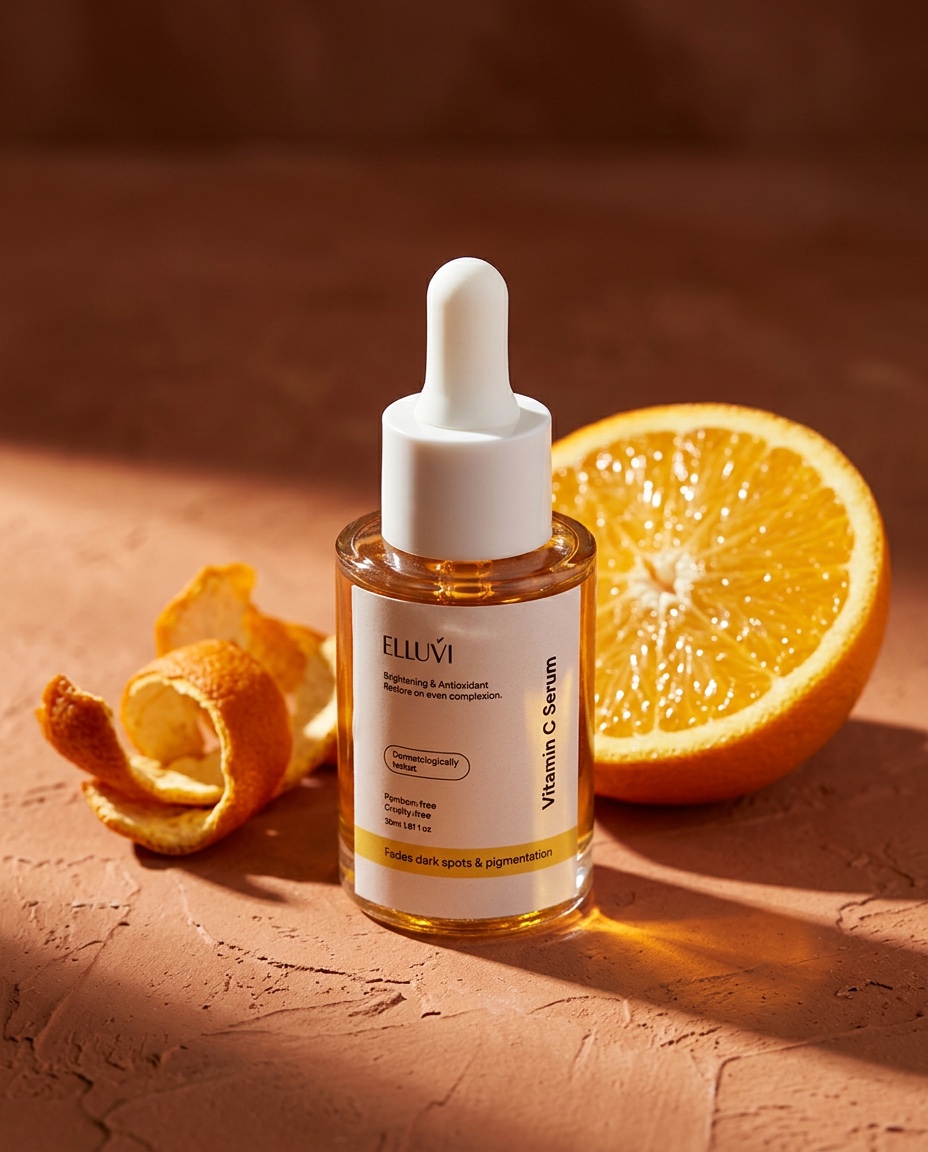
| Ascorbic acid 10% | Antioxidant; helps existing marks and dullness look lighter | Vitamin C Serum, Rs. 1,299 |
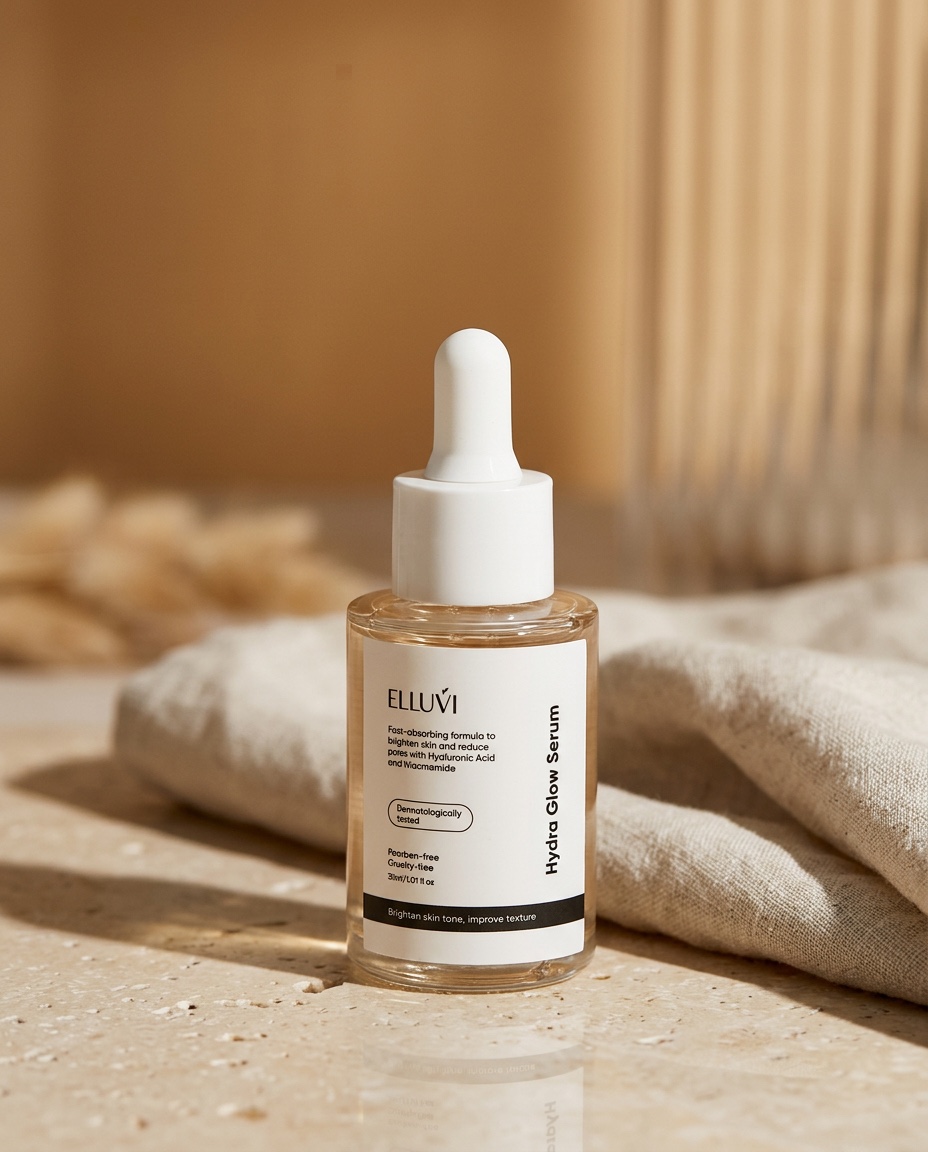
| Niacinamide 5–10% | Limits pigment transfer to skin cells; supports the barrier while other actives work | Hydra Glow Serum 10%, Hydra Glow Cream and Hydrating Moisturiser 5% |
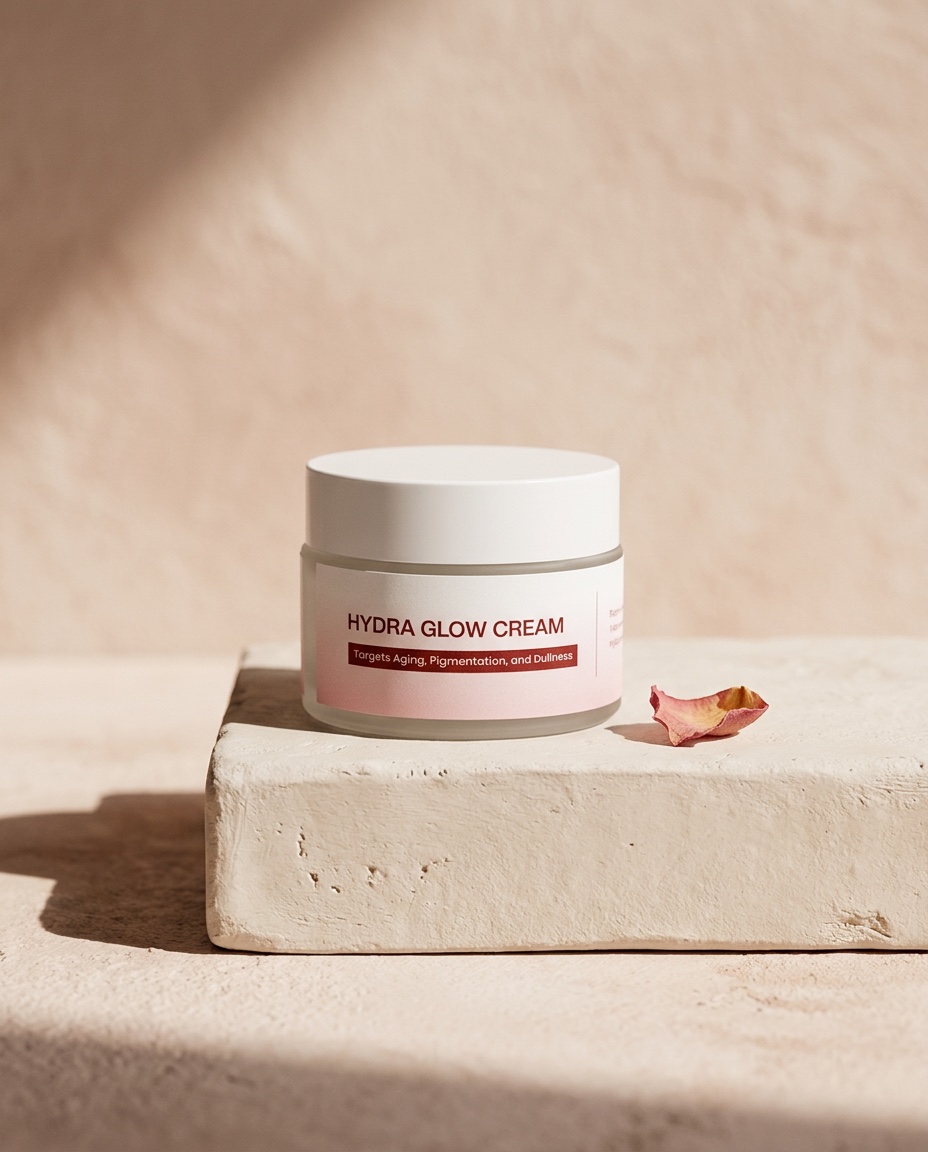
| Alpha arbutin 2% | Interrupts pigment production; slow, and the most tolerable of the tyrosinase inhibitors | Hydra Glow Cream, Rs. 1,449 |
| Retinol 0.3% | Turnover, so marked cells surface and shed sooner. Night only, not in pregnancy | Hydra Glow Cream and Age Defying Serum |
| Glycolic acid 5% | Surface exfoliation; helps the look of dullness and lets other actives through | Brightening Face Wash, Rs. 849 |
| Broad-spectrum SPF 50 | Stops new pigment. The only non-optional step, and we do not sell one | Buy elsewhere |
A realistic timeline
Fresh post-inflammatory marks lighten visibly in six to twelve weeks with consistent use and strict sun protection. Older marks and melasma take three to six months and may never clear completely. Anything promising a result in two weeks is either an exfoliant giving you a temporary glow or a steroid.
Photograph the same area in the same light once a fortnight rather than checking the mirror daily. Pigment fades too slowly to see day to day, which is why people abandon products that were working at week five.
What makes hyperpigmentation worse here
Picking spots, scrubs and grainy exfoliants, unlabelled mix creams containing steroids, lemon or other citrus juice on the skin, and going without sunscreen while using an active. Each of these is inflammation, and inflammation is how pigment gets made.
The mix cream problem is worth stating plainly because it is everywhere in this market. A cream with no printed ingredient list, no batch number and no manufacturer, that lightens the face within days, is very likely a steroid combination. It thins the skin, spreads visible vessels, and rebounds darker than the starting point when you stop. The speed people buy it for is the reason not to.
A routine that holds up
Morning: gentle cleanse, vitamin C, moisturiser, sunscreen. Night: cleanse, an active — alpha arbutin with niacinamide, or a retinoid — then moisturiser. Two actives is a routine; five is a barrier problem waiting to happen.
Introduce one product at a time, two weeks apart, so that when something stings you know what caused it. If the skin is tight, flaking or reactive, stop the actives and use only a cleanser and a ceramide moisturiser for a week — a compromised barrier darkens marks rather than clearing them.