Hyaluronic acid serum in Pakistan: the ingredient most people use backwards
Hyaluronic acid is a humectant — it holds many times its own weight in water. What the marketing leaves out is where that water comes from. In dry air, with nothing sealed over it, HA pulls moisture out of your own skin and that water then evaporates, which is why so many people report that a hyaluronic acid serum made their skin tighter. Applied to damp skin and sealed with a moisturiser, it works. That single detail decides the outcome.
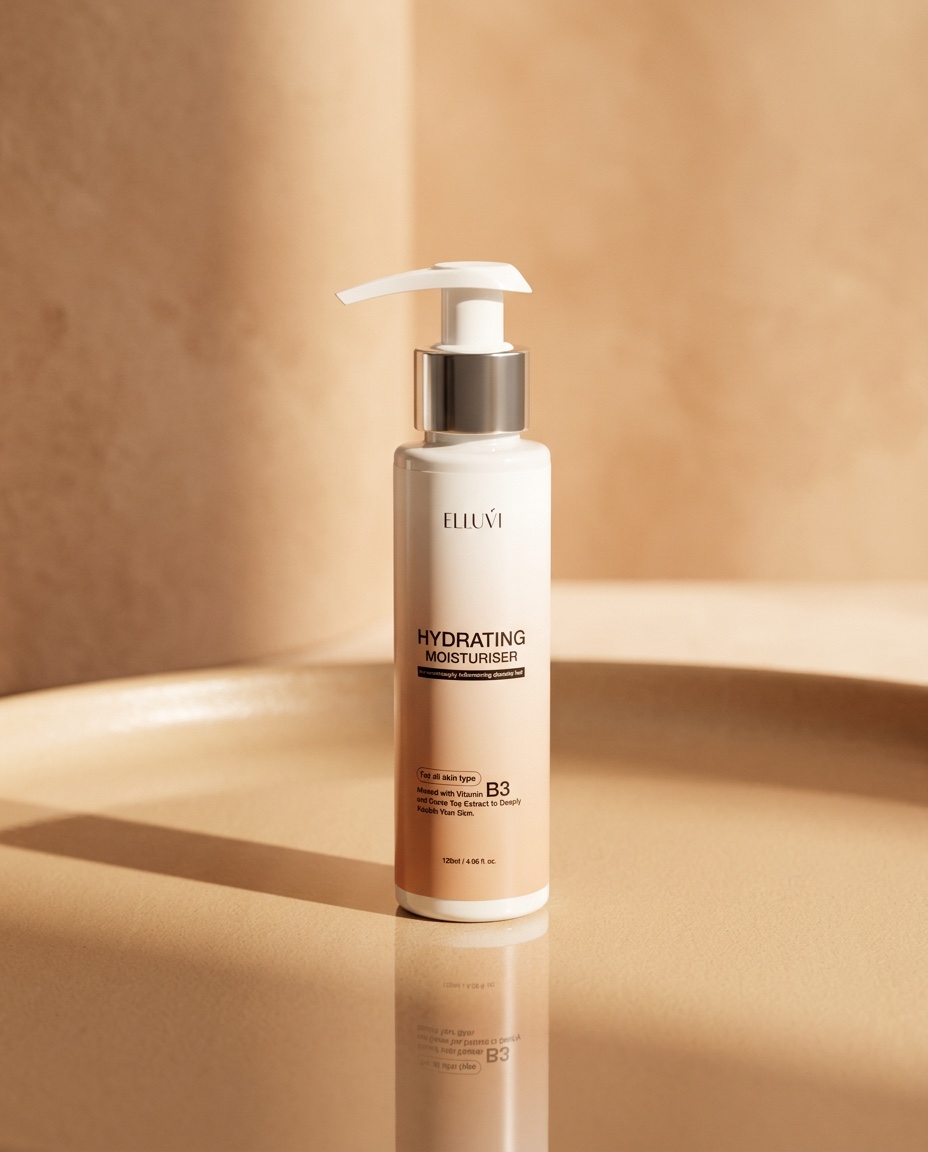
Elluvi does not sell hyaluronic acid on its own. It is in the moisturiser at 1%, alongside the ceramides that stop it drying you out in air conditioning, which is the failure mode a standalone HA serum has in a Pakistani summer.
Reviewed

What hyaluronic acid actually is
It is a humectant that binds water and holds it in the upper layers of skin. It is not an active in the corrective sense — it does not change pigment, texture, oil production or collagen. It makes skin look plumper while it is holding water.
Your body already makes it. The version in a bottle sits on and just inside the surface, which is why the effect is real, immediate and entirely dependent on there being water available for it to hold.
The mistake that makes skin drier
Applied to dry skin in dry air, hyaluronic acid draws water from the deeper layers of your own skin to the surface, where it evaporates. The result is tighter, drier skin than before. Apply it to damp skin and seal it with a moisturiser.
This is not a fringe edge case in Pakistan. An Islamabad or Peshawar winter, or any air-conditioned room in Karachi, is dry enough for it to happen reliably. If a hyaluronic serum has ever made your face feel tight, this was almost certainly why, and the fix costs nothing.
Molecular weight is the spec that matters
High-molecular-weight HA sits on the surface and holds water there. Low-molecular-weight HA penetrates slightly further for a deeper-feeling effect. Good formulas use several weights together; sodium hyaluronate is the more stable salt form used in most products.
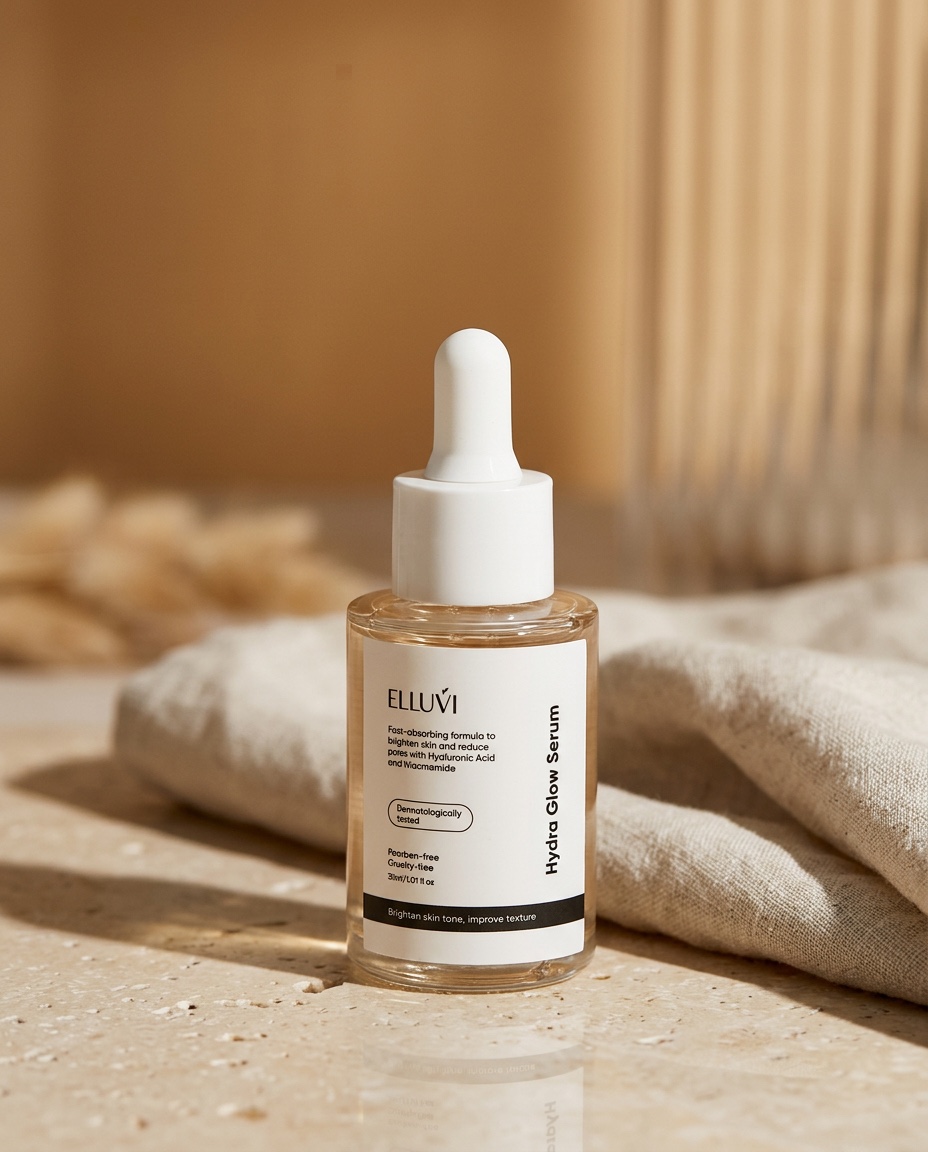
Very low weight fractions can feel more active on some reactive skin, which is one more reason to patch test any new serum. Low-molecular-weight HA at a modest stated percentage, such as the 0.5% in Hydra Glow Serum, is a well-established choice, and multi-weight blends are common too. What matters is that the label tells you which you are buying.
Swipe the table sideways to see every column.
| Product | What the label states | Price |
|---|---|---|
| ChiltanPure Hyaluronic Acid Serum | Hyaluronic acid 1%, 50 ml. No molecular weight. Rs. 30 per ml | Rs. 1,499 |
| Revival Naturals Hyaluronic Acid Serum | No percentage, no molecular weight. 30 ml. Rs. 72 per ml | Rs. 2,149 |
| Skin Sciences Hyaluronic Acid Serum | Hyaluronic acid and sodium hyaluronate both named, neither quantified. No size stated, so cost per ml cannot be worked out | Rs. 3,899 |
| Elluvi Hydra Glow Serum | Low-molecular-weight hyaluronic acid 0.5% stated, alongside niacinamide 10% and zinc PCA 1%. 30 ml. Not sold as a hyaluronic acid serum | Rs. 1,149 |
| Elluvi Hydrating Moisturiser | Hyaluronic acid 1% stated, with ceramides NP and EOP. 120 ml | Rs. 1,249 |
Humidity changes what you need
In humid Karachi air a hyaluronic serum performs well, because there is water in the air to hold. In dry northern winters it needs an occlusive layer over it, or it will work against you.
The practical rule for Pakistan: in humid months a hydrating serum plus a light gel moisturiser is enough. In dry months keep the serum but move to a richer cream over it. The step does not change, the thing you seal it with does.
Hyaluronic acid does not treat anything
It does not fade dark spots, clear acne, reduce oil or reverse fine lines. It temporarily plumps the skin, which softens the look of fine lines while the water is held. That is a cosmetic effect, not a correction.
This matters when you are deciding what to spend a limited budget on. If your complaints are pigmentation or breakouts, hyaluronic acid is a comfort layer, not the purchase that changes anything. If your complaint is tightness and dehydration, it is exactly right.
Why Elluvi puts it in everything instead of selling it alone
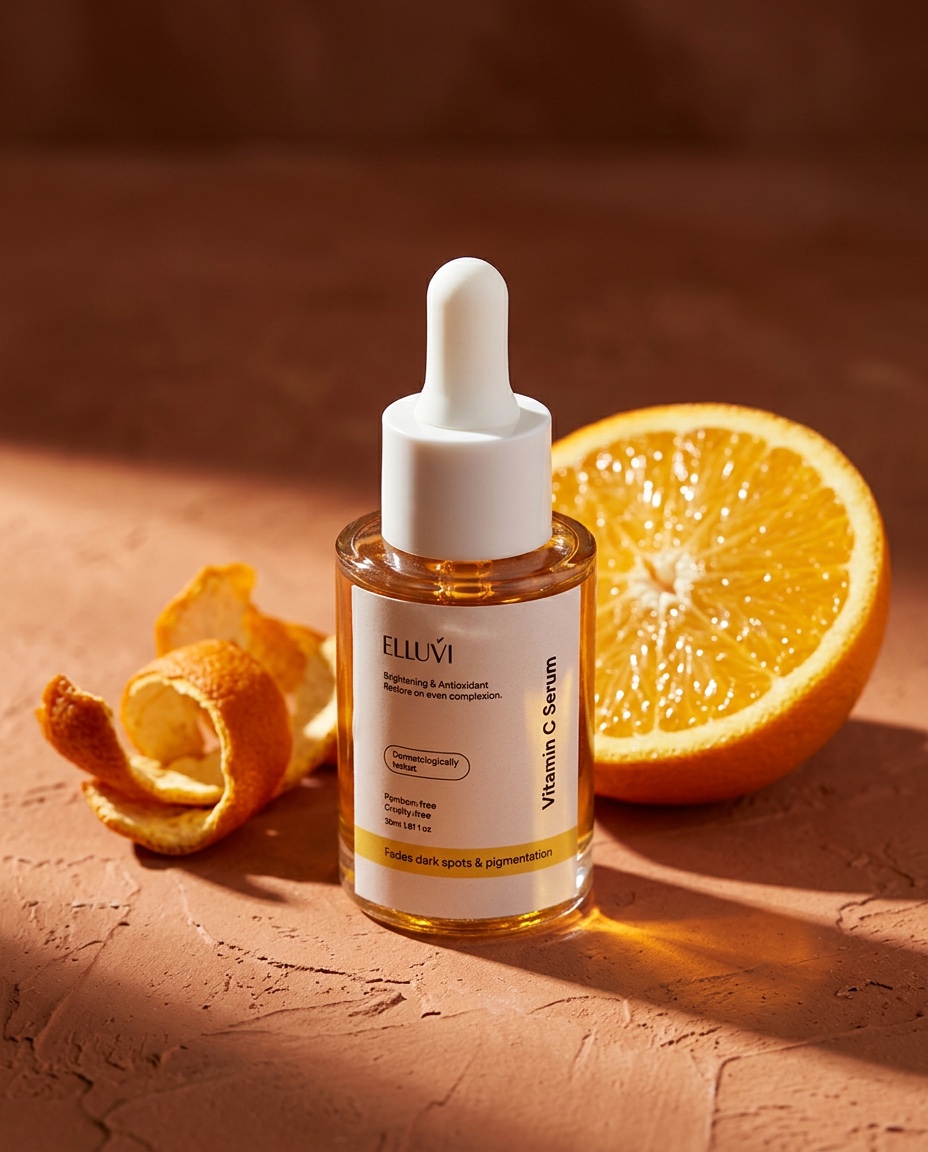
Every Elluvi leave-on product already contains hyaluronic acid: 0.5% in Hydra Glow Serum, Vitamin C Serum, Age Defying Serum and Hydra Glow Cream, and 1% in the Hydrating Moisturiser alongside ceramides NP and EOP.
That is a deliberate formulation choice rather than a marketing one. Hyaluronic acid works best when it is already sealed — putting it in the same formula as the actives and the barrier lipids solves the evaporation problem structurally instead of relying on you to layer correctly. It also means you are not paying separately for an inexpensive ingredient.
If you want a dedicated HA serum anyway
A standalone hyaluronic serum is a reasonable buy for genuinely dehydrated skin, or for layering under a heavier cream in winter. Look for multiple molecular weights and a stated percentage, and expect to pay very little — this is a cheap raw material.
Prices in Pakistan for imported HA serums run from around Rs. 1,000 to well past Rs. 4,000, and the expensive end is import cost rather than a better formula. Hyaluronic acid is one of the categories where paying more buys the least.
How to layer it correctly
Damp skin, thin layer, then a moisturiser within a minute while the skin is still damp. Morning, evening or both. It conflicts with nothing.
Apply a small amount to a discreet area of the jawline once daily for 2–3 days. Stop if persistent redness, itching or irritation occurs.